ラベル Google+ の投稿を表示しています。 すべての投稿を表示

2015年7月30日木曜日

Joined Google ATAP team

It has been 2 years since I moved from Japan to US. And starting this week, I joined a new team within Google called Google ATAP (Advanced Technologies and Projects).

I will be in charge of Developer Relations for Project Soli and Project Jacquard.

Project Soli aims to use motions to control devices, and building a sensor that could capture submillimeter motions of overlapping fingers in 3D space using radar.

Video of Project Soli


Project Jacquard is developing an interactive woven textile - a textile capable of registering touch and sending signals back to a computing device incorporating a new conductive yarn.

Video of Project Jacquard


Are you interested? We are hiring!

Please apply for a Software Engineer role from the following link if you'd like to join the team of pirates :D
https://www.google.com/about/careers/search#!t=jo&jid=109975001&

IMG_20150728_193611

Disclaimer: The opinions expressed here are my own, and do not reflect those of my employer. -Fumi Yamazaki

2015年7月7日火曜日

Liquid Democracy with Google Votes

Google Votes is an experiment in liquid democracy built on Google's internal corporate Google+ social network. A Liquid Democracy system gives all the control of Direct Democracy with the scalability of Representative Democracy. Users can vote directly or delegate power through their social networks.

Before we jump in to Google Votes, following video "Liquid Democracy In Simple Terms" might be a good start:


Google Votes is used for Google's internal decisions like food selections, cafe names, t-shirt designs, and Halloween contests.

Fortunately the team was successful in making those techtalk videos and paper public, I hope you enjoy. Note, some of the links in the video will not work since it is limited access within Google's corporate network.

Paper: "Google Votes: A Liquid Democracy Experiment on a Corporate Social Network"
http://www.tdcommons.org/dpubs_series/79/

Techtalk video: Voting Methods with Google Votes

This talk covers Approval, Ranked, Range/Score, and Plurality voting along with the Borda and Schulze ranking algorithms and their relation to Condorcet's Paradox.


Techtalk video: Liquid Democracy with Google Votes

This talk covers user experience aspects of delegated voting and three graph algorithms for flowing votes through a social graph called Tally, Coverage, and Power.


Other readings on Liquid Democracy, social network voting, e-governance, and social choice

Delegative Democracy - Bryan Ford 2002
Network Democracy - Steve Farrell 2009
Creating the world citizen Parliament - Douglas Schuler, ACM Interactions 2013
Tangled Signals of Democracy - Micah L. Sifry, Rebooting America 2008
A Democracy of Groups - Beth Simone Noveck 2005

Disclaimer: The opinions expressed here are my own, and do not reflect those of my employer. -Fumi Yamazaki

2015年7月4日土曜日

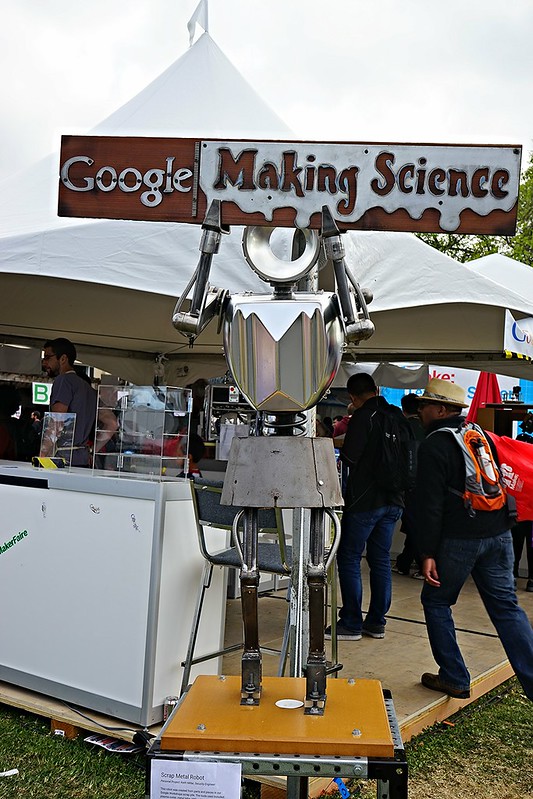
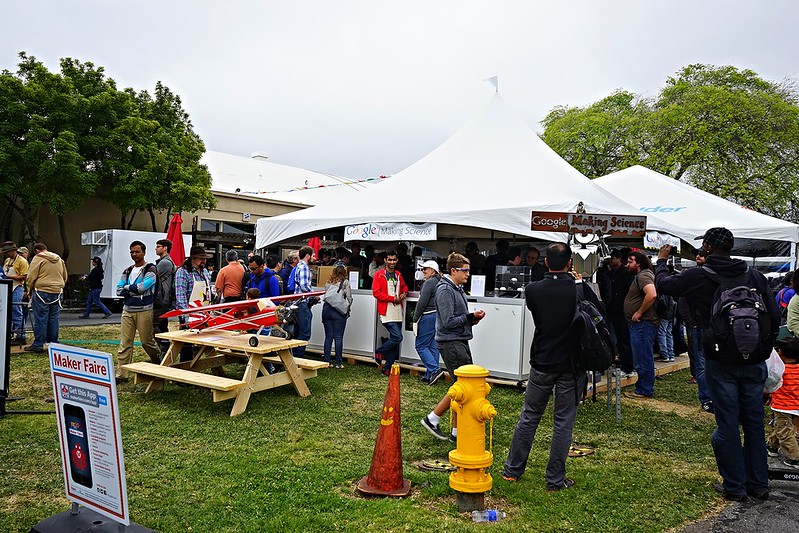
Google at Maker Faire 2015

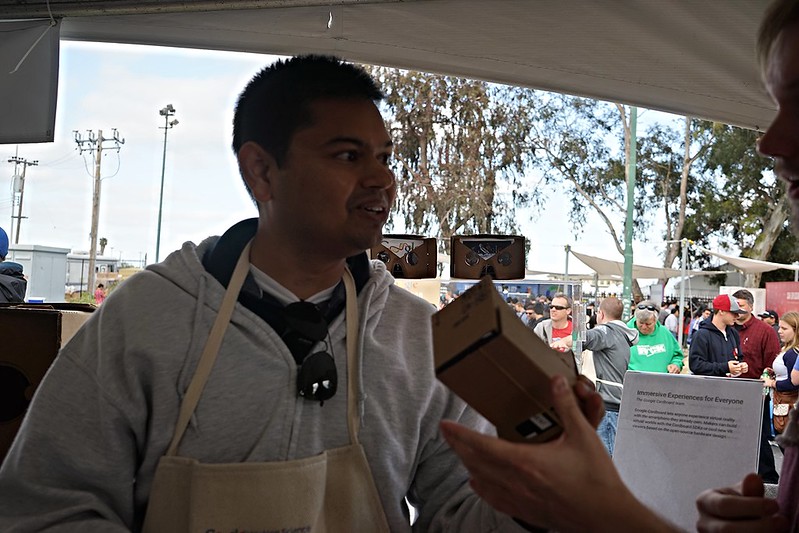
This year at Maker Faire Bay Area, I participated as one of the volunteer staffs to demo Google Cardboard. I couldn't shoot a photo of myself, but my colleague Hakuro did and tweeted it out- thanks Hakuro-san :D


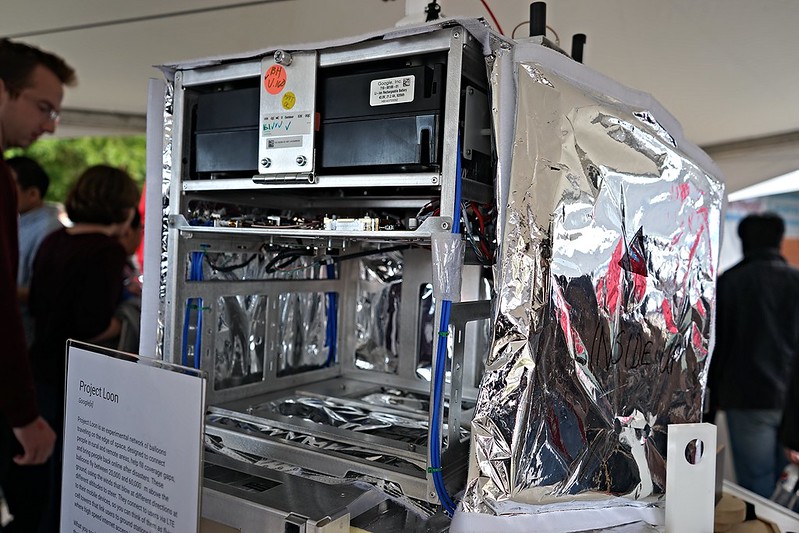
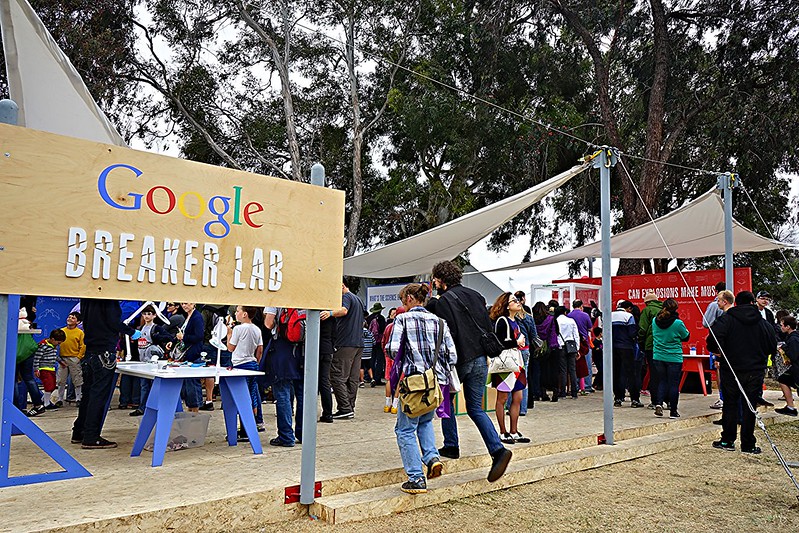
Google was one of the sponsors for Maker Faire Bay Area this year, and we had a tent to showcase some of our products like Cardboard, Project Loon, Project Wing, and some of the personal maker projects that employees were working on.

Maker Faire 2015

You can see the video of Chris walking through the exhibits here:


Maker Faire 2015

Maker Faire 2015

Maker Faire 2015

Maker Faire 2015


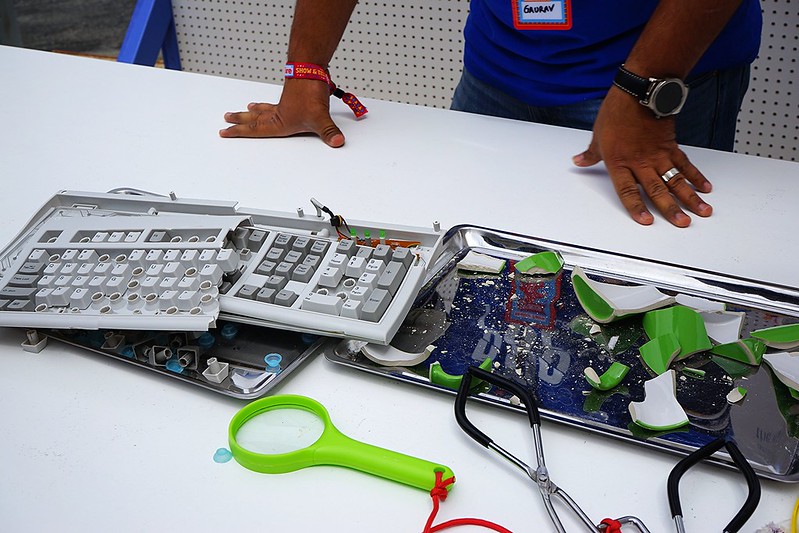
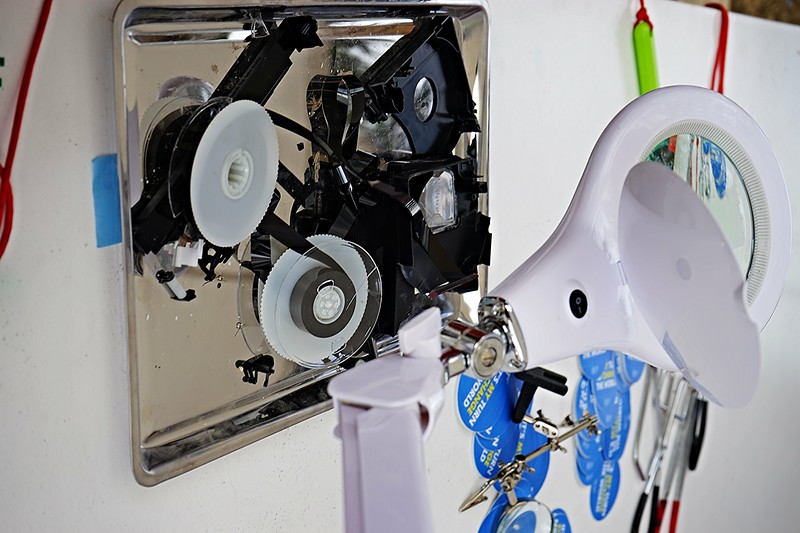
We also had the Maker Breaker Lab, where kids can select what they want to break (video tapes, computer keyboards, porcelain, etc...) and you can actually watch how it breaks.

Maker Faire 2015

Maker Faire 2015

Maker Faire

Maker Faire 2015

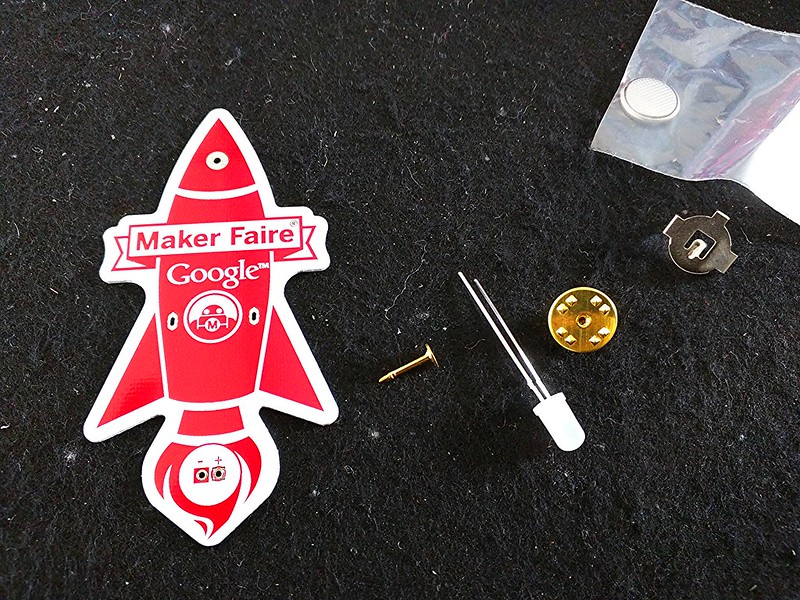
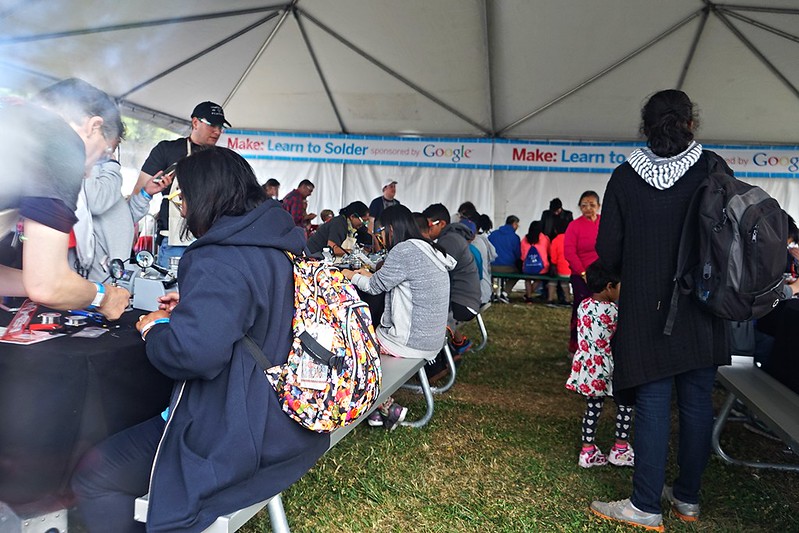
"Learn to solder" tent was also sponsored by Google, where everyone can solder their LED badge.

Maker Faire 2015

Maker Faire 2015

Disclaimer: The opinions expressed here are my own, and do not reflect those of my employer. -Fumi Yamazaki

2014年1月9日木曜日

How students can learn about Google's technologies and/or work with Google

I had a chance to talk with various students studying computer science recently, and was asked how they can be involved in Google's activities. Surprisingly many of them didn't know many of the programs I mentioned, so I thought I'd start documenting here.

"I want to meet like-minded developers!"
Google Developers Group (GDG)

Google Developer Groups (GDGs) are communities for developers who are interested in Google's developer technology; everything from the Android, App Engine, and Google Chrome platforms, to product APIs like the Maps API, YouTube API and Google Calendar API. A GDG can take many forms -- from just a few people getting together to watch our latest video, to large gatherings with demos and tech talks, to events like code sprints and hackathons. However, at the core, GDGs are focused on developers and technical content, and the core audience should be developers. There are 442 chapters in 98 countries worldwide, most of them are for "everyone" so you are welcome to join, some of them are run by university students and running inside university so you should check them out, and if there is not GDG in your city or university, feel free to start one! Note that GDGs are not run by Google- they are independent communities run by local developers globally.


"I want to work at Google as an intern!"
Google Internship Program

There are many internship opportunities globally- follow the link above to see the list. You can watch the videos of the interns from the past here.

Technical Intern experience


Product Management Intern


"I want to act as liaison between Google and my university!"
Google Student Ambassador Program

The Google Student Ambassador Program is an opportunity for students to act as liaisons between Google and their universities. These ambassadors:
-Learn about innovative Google products and programs.
-Plan and host fun events on campus.
-Act as a campus contact for Google teams.
-Help Google better understand each university’s culture.

"I want to receive scholarship from Google!"
Oh gosh there are so many scholarships that Google provides to students...

Generation Google Scholarship
Google Anita Borg Memorial Scholarship
Google Lime Scholarship for Students with Disabilities
Google SVA Scholarship for Student Veterans
Google Europe Scholarship for Students with Disabilities
Women in Tech Conference and Travel Grants

"I want to join programming contests!"
Google Code Jam

Google Code Jam is an international programming competition hosted and administered by Google. The competition consists of a set of algorithmic problems which must be solved in a fixed amount of time. Competitors may use any programming language and development environment to obtain their solutions. Google Code Jam is not just for students, but students are welcome to join the contest.

"I have a wonderful project!"
Google Science Fair

The Google Science Fair is an online competition open to students aged 13-18 around the globe. You can see the video from the Finalist Gala here:


"I want to be involved in Open Source Projects!"
Google Summer of Code

Google Summer of Code is a global program that offers post-secondary student developers ages 18 and older stipends to write code for various open source software projects. We have worked with open source, free software, and technology-related groups to identify and fund projects over a three month period. Since its inception in 2005, the program has brought together over 7,500 successful student participants and over 7,000 mentors from over 100 countries worldwide to produce over 50 million lines of code. Through Google Summer of Code, accepted student applicants are paired with a mentor or mentors from the participating projects, thus gaining exposure to real-world software development scenarios and the opportunity for employment in areas related to their academic pursuits. In turn, the participating projects are able to more easily identify and bring in new developers. Best of all, more source code is created and released for the use and benefit of all.

"I want to be involved in Open Source Projects and I am pre-university student!" Google Code-In

Google Code-in is a contest for pre-university students (e.g., high school and secondary school students ages 13-17) with the goal of encouraging young people to participate in open source. There have been 1238 students from 71 countries that completed tasks in the Google Code-in over the last three years of the contest. For many students the Google Code-in contest is their first introduction to open source development. For Google Code-in we work with open source organizations, each of whom has experience mentoring students in the Google Summer of Code program, to provide "bite sized" tasks for participating students to complete.

"I don't code. Is there a policy related fellowship?"
Google Policy Fellowship

The Google Policy Fellowship program was inspired by Google’s Summer of Code with a public policy twist. The Google Policy Fellowship program offers undergraduate, graduate, and law students interested in Internet and technology policy the opportunity to spend the summer contributing to the public dialogue on these issues, and exploring future academic and professional interests. Fellows will have the opportunity to work at public interest organizations at the forefront of debates on broadband and access policy, content regulation, copyright and trademark reform, consumer privacy, open government, and more. More information about the host organizations and the areas of focus for the fellows are outlined here. Fellows will be assigned a lead mentor at their host organizations, but will have the opportunity to work with several senior staff members over the course of the summer. Fellows will be expected to make substantive contributions to the work of their organization, including conducting policy research and analysis; drafting reports and analyses; attending government and industry meetings and conferences; and participating in other advocacy activities.

"I don't code. Is there a journalism related fellowship?"
Google Journalism Fellowships

In an effort to help develop the next crop of reporters working to keep the world informed, educated and entertained, we have created the Google Journalism Fellowship. As a company dedicated to making the world’s information easily accessible, Google recognizes that behind many blue links is a journalist and that quality journalism is a key ingredient of a vibrant and functioning society. The program is aimed at undergraduate, graduate and journalism students interested in using technology to tell stories in new and dynamic ways. The Fellows will get the opportunity to spend the summer contributing to a variety of organizations -- from those that are steeped in investigative journalism to those working for press freedom around the world and to those that are helping the industry figure out its future in the digital age. There will be a focus on data driven journalism, online free expression and rethinking the business of journalism. The 10-week long Fellowship will open with a week at Google followed by nine weeks at one of the participating organizations.

"I want to join Google's computer science summer camp!"
Computer Science Summer Institute (CSSI)

Google's seventh annual Computer Science Summer Institute (CSSI) is a three-week introduction to computer science for graduating high school seniors with a passion for technology — especially students from historically underrepresented groups in the field. CSSI is not your average summer camp. It's an intensive, interactive, hands-on and fun program that seeks to inspire the tech leaders and innovators of tomorrow by supporting the study of computer science, software engineering and other closely related subjects. As CSSI students, you will learn programming fundamentals directly from Google engineers, get an inside look at some of Google's most exciting, emerging technologies, and even design and develop your very own application with fellow participants that you will showcase to Googlers in local offices. You'll attend the program at one of our Google office locations in Mountain View, Calif., Boston, or Seattle/Kirkland, and experience firsthand Google's unique and innovative office culture. And at the end of each day, attendees will enjoy a unique residential experience in dorm-style housing at local universities. CSSI is an all-expenses-paid program. Google will provide housing, meals and transportation for invited students.

"I want to receive research grants from Google!"
Research at Google - Award Programs

Google supports academic communities in computer science, engineering, and related fields by providing funding opportunities for university faculty. Our ongoing programs regularly solicit proposals for funding either through an open submission process or by invitation. All awards made through Google's academic funding programs are structured as unrestricted gifts to universities.

Google Faculty Research Awards
Google Focused Research Awards
Visiting Faculty Program
Exacycle Program for Visiting Faculty
Google App Engine Education Awards
Google App Engine Research Awards

"I am graduating university and seeking a full time job opportunity!"
Jobs at Google

Google is hiring :)

"I want to know about the newest information from Google to students!"
Following are great channels for that:

Google Students Google+ 
Google Students Blog
Google Students Twitter
Google Students Facebook
Google in Education Website

Disclaimer: The opinions expressed here are my own, and do not reflect those of my employer. -Fumi Yamazaki

2013年4月14日日曜日

Google I/O and DevFest Japan

I was asked by my colleague to write a blog post about the event we organized in Japan after Google I/O last year, so here we go!


[DevFestX Japan 2012 Summer, Tokyo venue photo by Yoichiro]

==Background==

Not everyone gets tickets to Google I/O- the annual developer event hosted by Google. Tickets sell out very quickly- in less than an hour in recent years. All of the videos of the sessions will be uploaded to YouTube after the event, but all of the sessions are in English so it is hard for non-English speakers to watch. Also, there are numerous session videos, thus difficult for developers in Japan to identify which videos they should select and watch.

==What we did in 2011==

In 2011, following Google I/O 2011, we organized a Google I/O report event in Tokyo. It was basically a series of lightning talks, and the contents were from Google I/O sessions. Several Googlers and Google Developers Experts (GDEs, non-Googler developers that are experts in various technology) that were able to join Google I/O selected several sessions that they thought were very important or interesting, and summarized the contents of 1 hour session contents into 3 minutes lightning talks. That way, developers in Japan were able to grasp all of the important essence from 2 day event in just 3-4 hours, in Japanese language. (Overview in 30 minutes, day1 & 2 keynote 10 minutes each, and 24 sessions * 3 minutes each = 72 minutes, and then we had Q&A sessions)

Here you can see what we covered :

Overview http://goo.gl/62HNl
[Android] Keynote Day1  
[Chrome] Keynote Day2  http://goo.gl/C68o1
[App Engine] Full Text Search http://goo.gl/pa5Tf
[Google APIs] An introduction to the +1 button http://goo.gl/B3Qlg
[Android] Fireside Chat with the Android Team
[App Engine] More 9s Please: Under The Covers of the High Replication Datastore http://goo.gl/8kP8W
[Chrome] Chrome Web Store Publisher Forum http://goo.gl/cIsIs
[Geo] Connecting People and Places http://goo.gl/Eu7hj
[Android] Android Market for Developers
[Apps] GoogleAppsScript
[Commerce] In-App Payment
[Geo] Designing Maps Applications for Usability on Mobile and Desktop  http://goo.gl/aUnrt
[Google APIs] Building Custom Client Libraries for Google APIs  http://goo.gl/oYIvv
[Android] Optimizing Android Apps with Google Analytics
[Tech Talk] Crisis Response 2.0 - Empowering Developers in Times of Crisis http://goo.gl/fwiVw
[Chrome] WebGL Techniques and Performance http://goo.gl/qq56I
[App Engine] App Engine Backends, Putting Task Queues to Work http://goo.gl/PyuO6
[Tech Talk] Python at Google
[Chrome] Super Browser 2 Turbo HD Remix: Introduction to HTML5 Game Development http://goo.gl/eSYli
[App Engine] Go on AppEngine  http://goo.gl/RXscj
[Google APIs] ClientLogin #FAIL http://goo.gl/hg6z5
[Android] Building Aggressively Compatible Android Games http://goo.gl/Q65bU
[Tech Talk] Building Web Apps for Google TV http://goo.gl/bEzQq
[App Engine] Leaving Preview and Pricing Change http://goo.gl/411bH
[Chrome] Chrome Dev Tools Reloaded http://goo.gl/W3Kd7
[Android] Other updates on Android

==What we did in 2012==

We hosted an event called DevFestX Japan 2012 Summer on a Sunday right after Google I/O.

Again, the purpose was to share the 3-day worth learnings from Google I/O in just 1 day, in Japanese language, for the Japanese developers.

We wanted to try several things in 2012- since we had 7 Google Developer Groups (GDGs) nationwide in Japan, so we decided to connect those local chapters via Hangout on Air. (One of the GDEs lived in US, so we added LA venue. Also, folks in Shinshu wished to do a public viewing, so we made Shinshu as venue as well. They loved the experience and actually founded GDG Shinshu after the event.)


Also, 3 minute per session / evening only event was too short in 2011, so we decided to make it an afternoon- night event. (We did technical rehearsals in the morning so it was basically a full day event.)


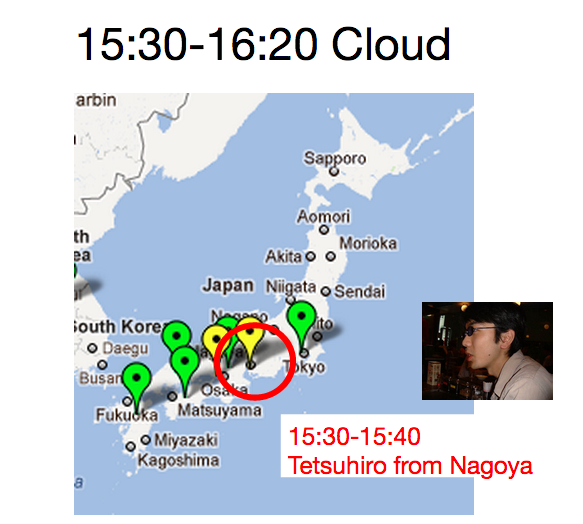
We also wanted to make it theme based, so we structured 1 hour dedicated to Android, the next hour to Chrome, the next to Cloud, and then Geo and social.

We wanted everyone in Japan to be feeling the sense of the "main venue" not satellite venue just watching, so we sent the speakers from Tokyo to all of the GDG venues nation wide. For example, the Android sessions would be first 10 minutes from Tokyo, next 10 minutes from Kyoto, next 10 minutes from Fukuoka, and then the next 20 minutes were Q&A- anyone in any venue can ask any question about Android, and GDEs will answer them if they can. We also had Google Moderator for each technology so that shy people who were unable to stand up and ask questions had a chance as well. 10 minute short break to switch the theme, and start the next 1 hour for Chrome, etc. 

We livestreamed the whole event, so those who could not come to the physical venue could join online, and all of the video archives were made available later, so those who missed on the event day could watch later.

The other great thing was that the GDEs brought the devices they got at Google I/O to all of the GDGs, so people were able to touch, try the newest devices such as Nexus7, NexusQ, Android ADK 2012, etc.


Also, since the speakers (GDEs) went all around Japan, they had the opportunity to meet various developers outside Tokyo, and the local developers were able to meet speakers from Tokyo in person so it was a great networking opportunity.

One of the nice comments from the audience:

"Everyone in all of the venues felt they are the center of the event, not a satellite or remote venue. DevFestX Japan was a game changer event for conferences. "


==Overview==

I was in Tokyo, and opened up the event, explained what GDGs are, who GDEs are, what DevFestX are, introduced various programs such as Google Developers Live (GDLs), Google Developers Academy, etc. We also had a mingling time in the beginning so that the attendees are comfortable spending the day together.


Then, we switched the main camera to Kyoto, where Yukio Ando gave his overview of Google I/O 2012- about the venue, event app, sandbox, party, Google Glass and Sergey's keynote, lots of visuals for those who could not go can imagine what it was like.


You can see the slides here:


And the video here:


==Android==

As for Android, we had 3 speakers travel to 3 different venues, and gave speeches from there.


Topics covered were as follows:


  • Google Cloud Messaging for Android
  • What’s new in Android Developer Tools
  • Doing More with Less: Being a Good Android Citizen
  • ADK 2.0
  • Android Fireside Chat
  • Making Good Apps Great
  • Android Design Success
  • Google Play


Then, 20 minutes for Q&A on Android.


People lining up for questions... looks like there are more people queued up than those sitting? ;)


Slides:


Video:


==Chrome & HTML5==

As for Chrome & HTML5, we had 2 speakers travel to 2 different venues, and gave speeches from there.


Topics covered were as follows:


  • Chrome
    • Chrome Extension & Apps Manifest Version 2
    • Chrome Extension’s new features
    • Chrome Apps
    • Developer Tool’s new features
  • HTML5
    • Web Components
    • Web RTC
    • Web Intents
    • Web Audio API
    • Sublime, Yeoman
    • Advanced CSS/HTML5 Features & Tools
    • PvP Gaming w/ HTML5


Then, 20 minutes for Q&A on Chrome.

Slides:


Video:


==Cloud==

As for cloud, we had 3 speakers travel to 3 different venues, and gave speeches from there.


Topics covered were as follows:


  • Google Compute Engine
  • Google App Engine
  • EndPoints@GAE
  • Google Cloud Storage
  • Google Apps Script
  • Google Drive


Then, 20 minutes for Q&A on Cloud services.

Slides:


Video:


==Social & Geo==


As for social and Geo services, we had 3 speakers travel to 3 different venues, and gave speeches from there. One of the GDEs was in US (Los Angeles) but he joined to speak despite the time differences.


Topics covered were as follows:


  • Geo
    • Maps API V3
    • Places API
    • Google Maps Engine
    • Google Maps Coordinate
  • Social
    • Google+ Events
    • Google+ History
    • Google+ Tablet App
    • Google+ platform for Mobile


Then, 20 minutes for Q&A on Geo and Social.

Slides:


Video:


==Closing==

After the closing, of course all the venues went out to party- some of them had lightening talks, some had pizza party, etc.


Google+ events
Tweets

We also created nice swags- Google sandals- if you walk on beach, you can leave footprints of Google logo :D


This is a cute Android USB memory we created as swag.


==Preparation==

In order to prepare for this DevFest, all of the GDG managers went to negotiate with the venues, prepared for the event, we did many rehearsals so that Hangout On Air will work.

All of the GDEs who went to Google I/O created a spreadsheet so that they know who will be going to which session, so that they can avoid overlaps, and each night after I/O sessions were over, we got together to have a meeting to share what each person learned, which session was interesting and worth sharing at DevFestX, to the Japanese developers who could not come to San Francisco.


...and sometimes make Google logos....


... or end up playing with Google cushions...

I tried to search for us having serious meetings at I/O venue but all I could find was fun ones ;)


==GDG DevFest Japan 2013==

So what are we doing this year?

Of course we are doing something similar- all of the GDGs are preparing their venues, all of the GDEs are preparing their contents, and Japanese developers are going to be united again to share, learn and discuss about Google's developer facing technologies.

GDG DevFest Japan 2013 site is up... registration is now open! (And Tokyo venue is already fully booked).

https://sites.google.com/site/devfestjapan2013/

Disclaimer: The opinions expressed here are my own, and do not reflect those of my employer. -Fumi Yamazaki