ラベル CrisisResponse の投稿を表示しています。 すべての投稿を表示

2015年6月23日火曜日

Smart Cities, Smart Communities (Notes from Technologies for Crisis Response & Community Resilience #4)

Sensors in Service of Public Health 
Evan Thomas (Portland State University)

Examples of Interventions in Rwanda
IMG_20150622_135105

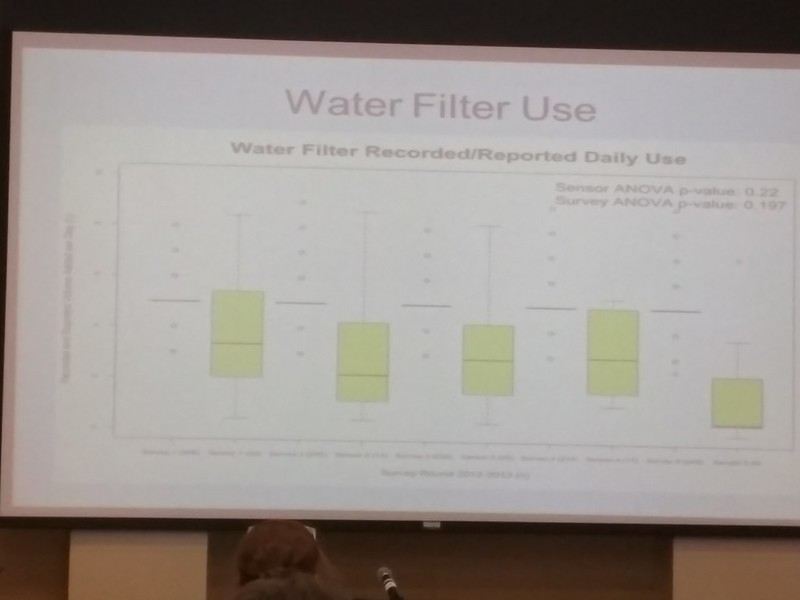
Example1. Sensor of water filter use, looking at impact on diarrhea

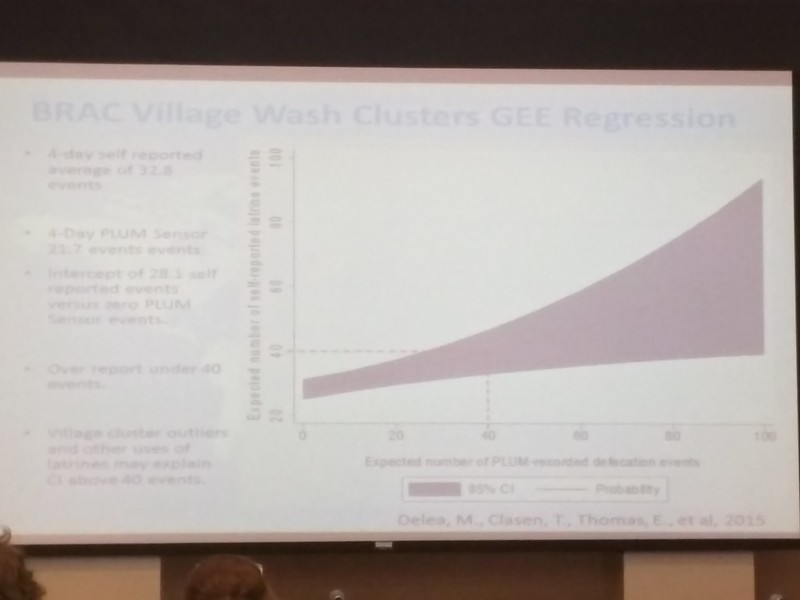
- By using sensors, we can actually know the use and behaviors, which is different from surveys-  there are huge discrepancy between actual sensor data and survey result
IMG_20150622_135318

- Seeing inside the households: How consistently are they using water filter?
  ex. replied they are using filters but reality is only once in 2 weeks
- Water filter use between open and closed arms > when people knows there are sensors, they behave differently

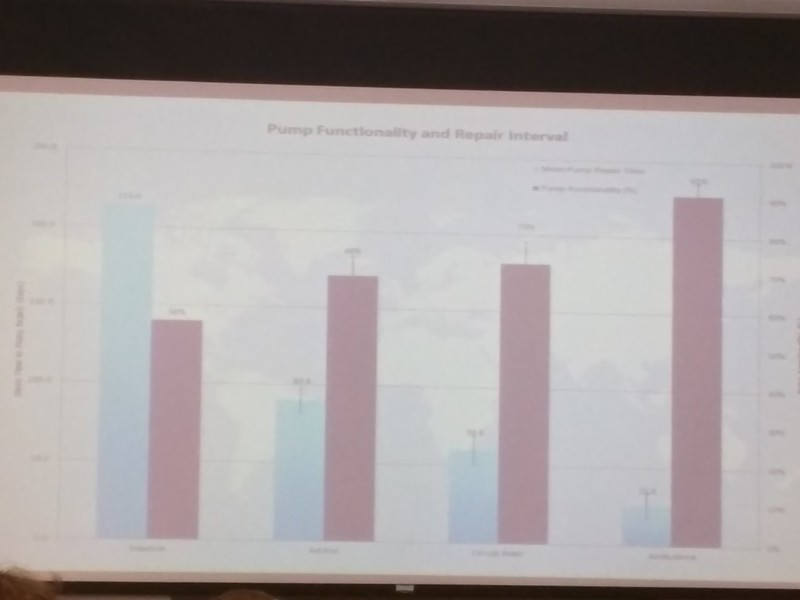
Example 2. Pump in Rwanda

- In the past, staffs were looking for broken pumps vs using sensors and based on data sending people to fix pumps
- Cost effective? yes
IMG_20150622_135656

IMG_20150622_135909

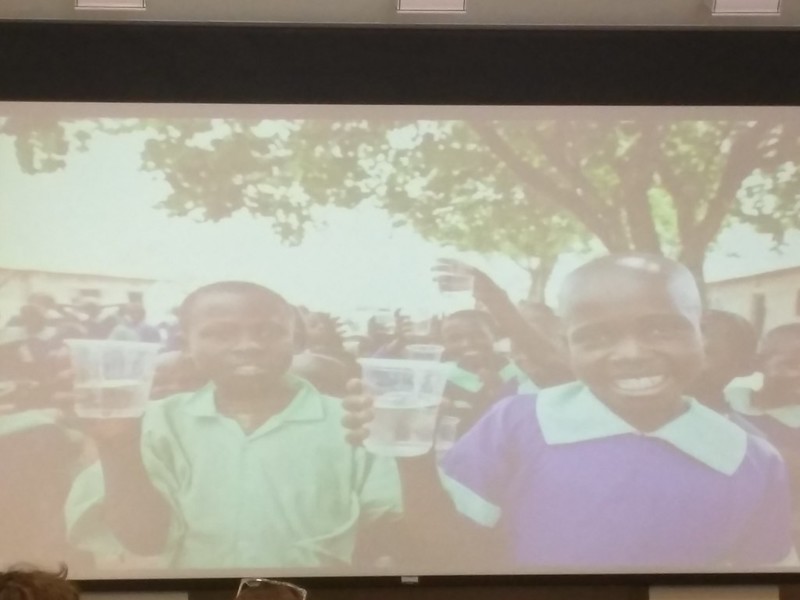
- This picture does not mean those children has clean water!
IMG_20150622_135944

Building Resilient Health Systems Through Remote Monitoring and Analytics 
Martin Lukac (Nexleaf Analytics)

- 20 million children vaccinated
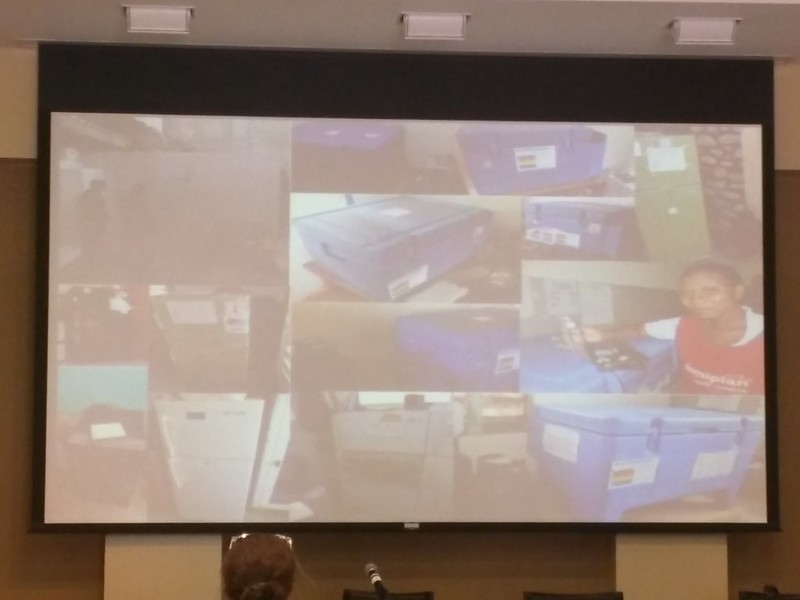
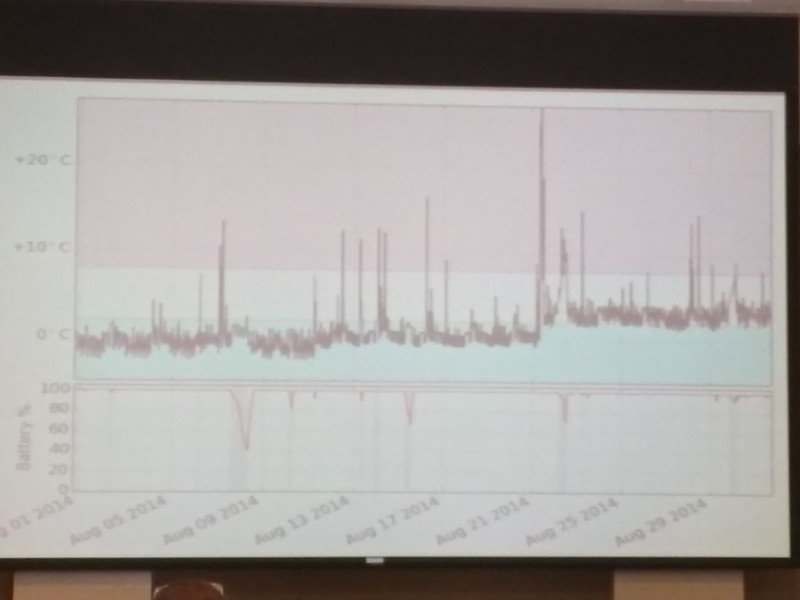
- Vaccines are too hot or too cold, because fridge is malfunctioning
- "Why not replace fridges in poorest countries?"
- No good data about fridges' performance
- Sensors to send out alerts when temperature goes wrong, dashboard
- Testing with few hundred fridges, on average 50% of the time, too hot or too cold
- New fridges are failing as much as older ones > replacing old fridges are not going to solve the problem
- Implemented SMS alert > improved 10x
- Vaccine fridges can call for help
- Data-driven procurement decisions
- Resource allocation: fridge, parts, technicians, workflows
- Greater vaccine coverage at same costs, more kids vaccinated
- IoT for developing countries -> focus on communities, groundwork for resilient communities
- Instead of taking things built for developed countries and bringing it to developing countries, build with developing countries

IMG_20150622_141430

IMG_20150622_141755

Bridging the Environmental Data Divide 
Sean McDonald (Frontline SMS)

- Challenge - need fixed line power or Internet signal
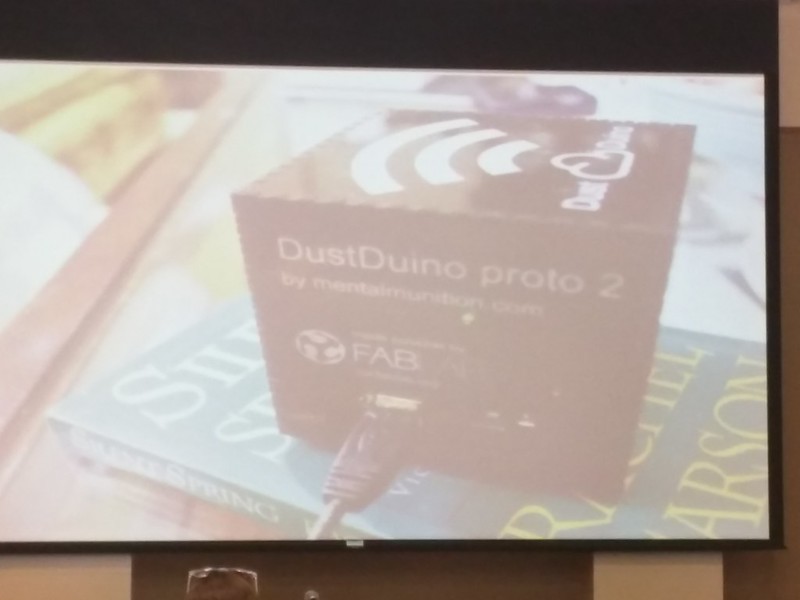
- DustDuino -> OpenDustMap: measuring air quality by public transportation, testing in Brazil
IMG_20150622_142635

- Resilience is an organizing challenge -> data is not output, it defines the process, need meaningful interaction
- Every decision about data is a decision about power
- Communities are the hard part
- Organizing communities begins by meeting people
- Less than 40% of people in the world are not online
- 7.2 billion active mobile subscribers, 3.6 billion unique users - SMS is the only way to reach them all
- Digital tech makes them better informed than 5 years ago
- People in the country with Ebola -> getting 200 messages saying "wash your hands" :(
- Context is important
- Resilience is not one message away! Relationships building is the work.
- No extra time in disaster- embed context and significance into routing and processing of the data in the system.
- We cannot assume homogeneity. Resilience approaches must be multi-channel.

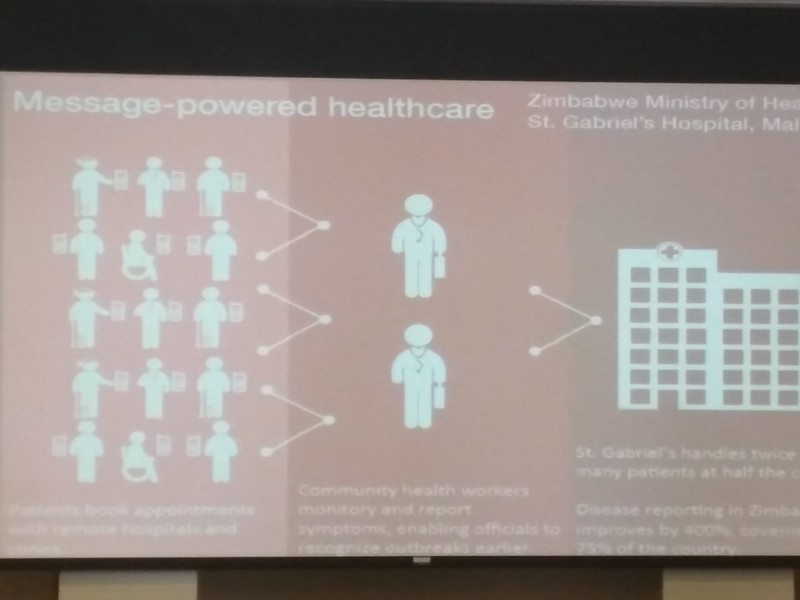
Message powered healthcare: Hospital in Malau doubled the number of patients they can treat
IMG_20150622_143601

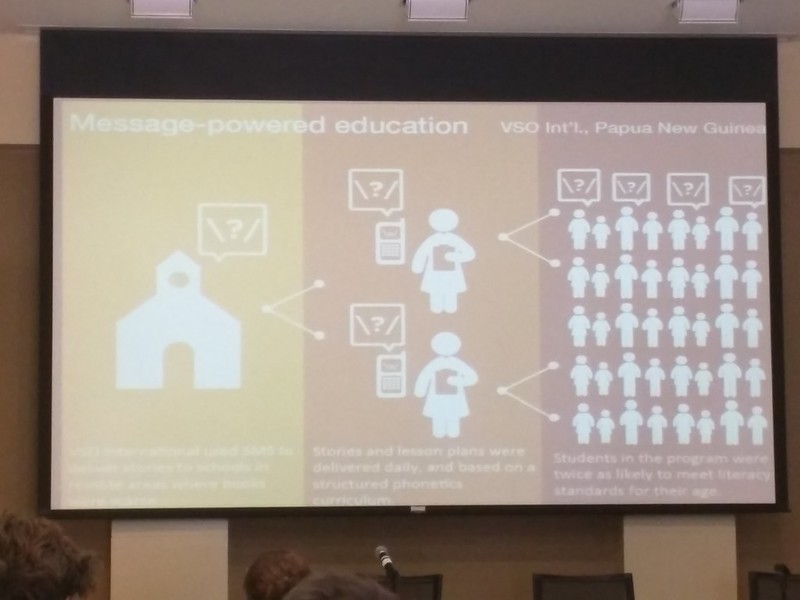
Message powered education

IMG_20150622_143630

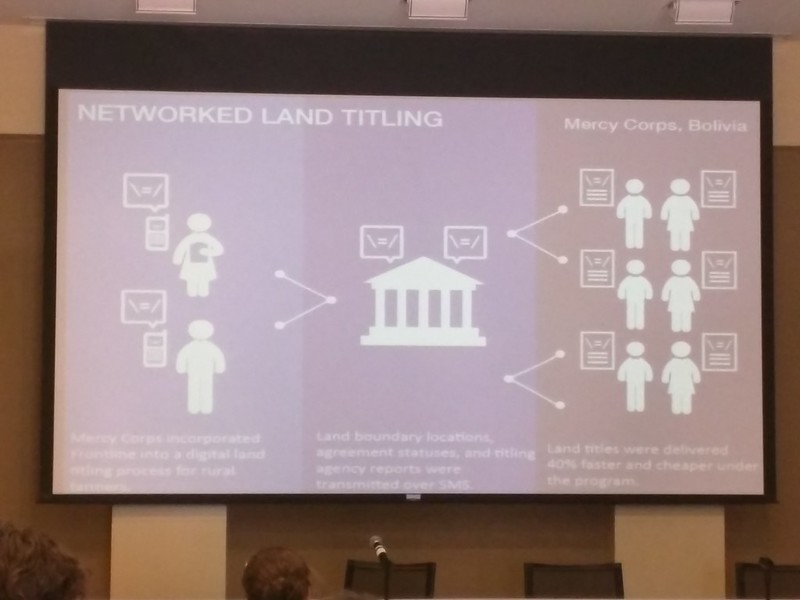
Bolivia Mercy Corps, Networked land titling
IMG_20150622_143653

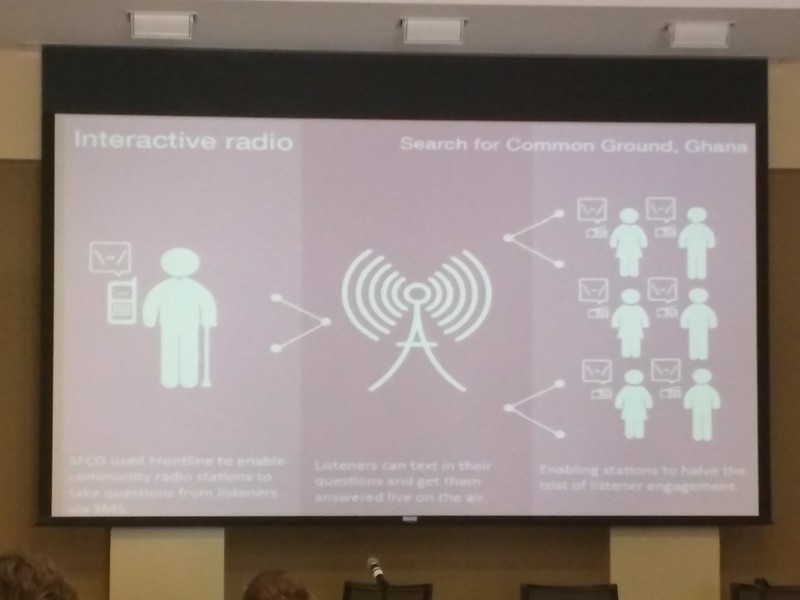
Interactive Radio
- Radio reaches the most number of people during disasters
IMG_20150622_143726

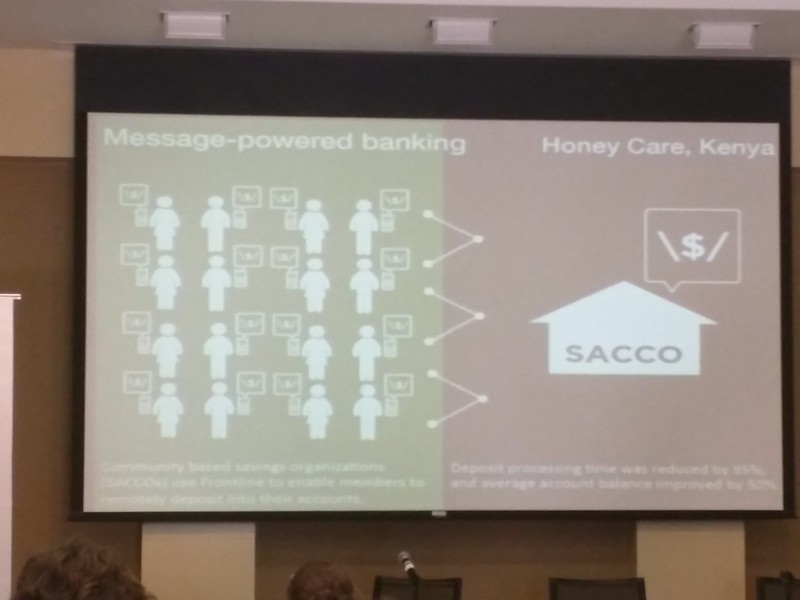
Message-powered banking
IMG_20150622_143746

Disclaimer: The opinions expressed here are my own, and do not reflect those of my employer. -Fumi Yamazaki

Ignite Talks: Perspectives from Implementers (Notes from Technologies for Crisis Response & Community Resilience #3)

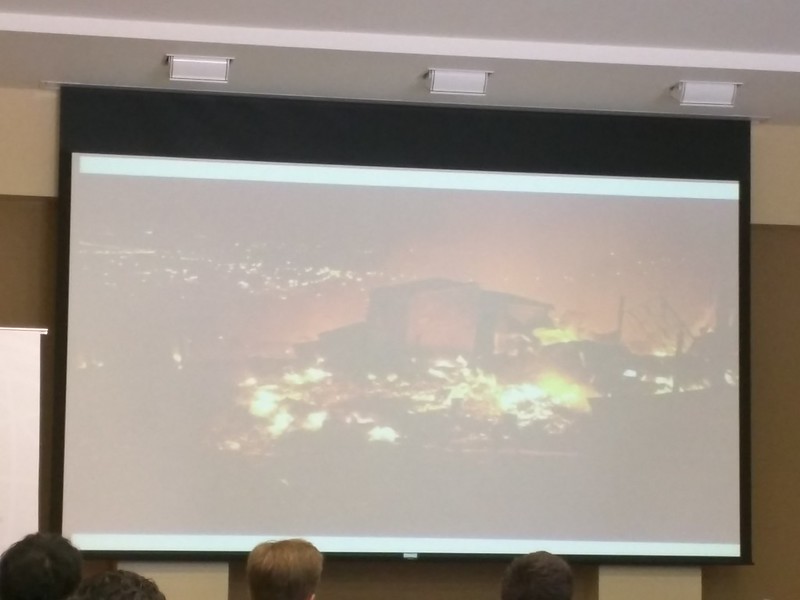
Early-warning Systems to Prevent Fires in Urban Slums 
Paul Mesarcik (Lumkani)

- Fire spreads quickly, houses are fragile to fire and extremely dense in those urban slums
- In March 2015 in Manila, just 2 fires made 10,000 families go homeless

IMG_20150622_122031

Solution:
1. In-home heat detector
2. Transmission to neighbouring devices
3. Data collection through internet gateway

2007 - 1 billion people worldwide were affected
2020 - 1.4 billion people worldwide will be affected

Urban slums are one of the most underserved communities in the world.

Peer to Peer Communication for Resilience 
Meena Palaniappan (Atma Connect)

- Connecting and empowering people for resilience
- People are not objects of development, we need to work together
- Poor people will suffer the most from climate changes- flooding, etc
- Social cohesion is key resilience tool (people are far more likely to survive disasters when they have good social networks and connections)
- Mobiles for people- build technology to help people solve their own problems.
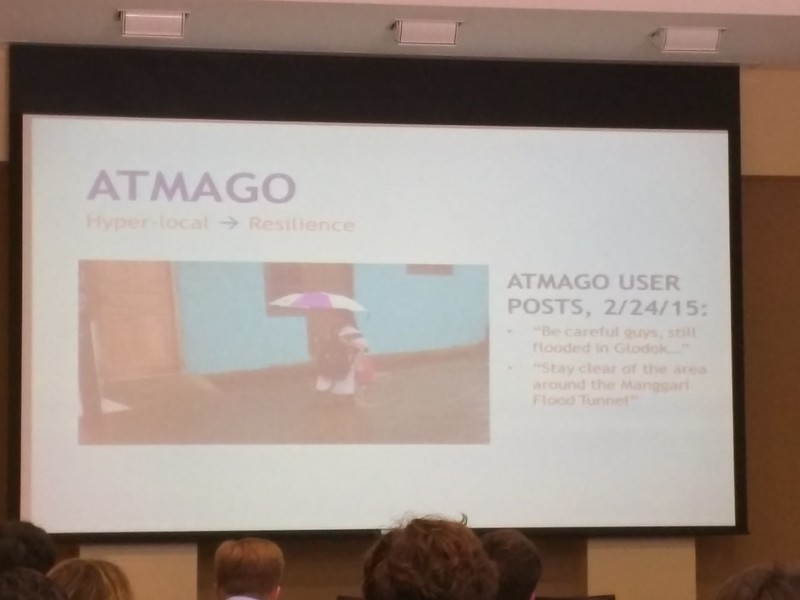
- AtmaGo - a mobile web app to connect and help neighbors
- People in poor neighborhoods miss early warnings. Hyper local information sharing is important, with information such as flood is coming, road blocks, etc.
- AtmaGo is built on Facebook and Twitter, since that's what people in Jakarta use.

IMG_20150622_123012

Data Mining to Increase Small Farmer Resilience & Agricultural Performance in Latin America 
Everett Wetchler (Bayes Impact)

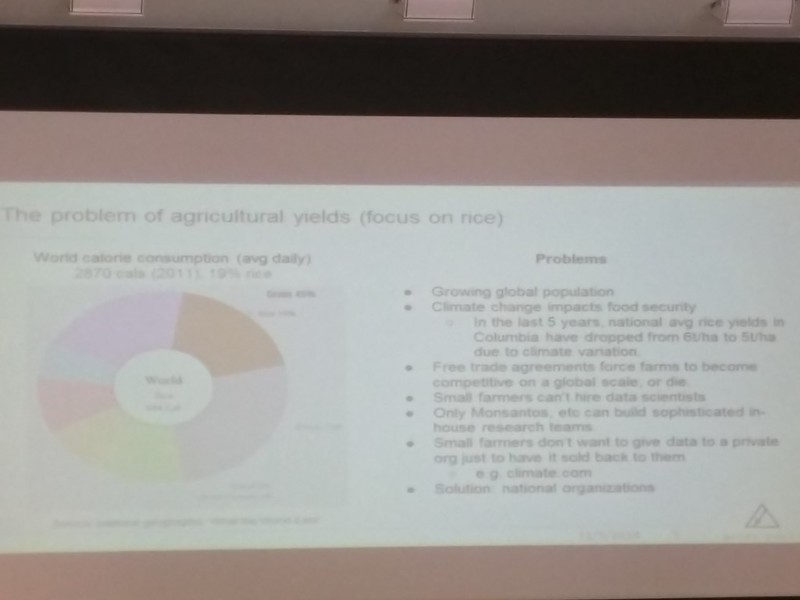
- Agriculture yields problem- focus on rice
- Growing global competition, climate change, FTA making farmers difficult
- Organizations in LatAm- many are funded internationally
- Big data in rice agriculture workshop - many talented agronomists, very few software engineers

IMG_20150622_123520

Finding Data Invisibles: Addressing the Data Gap with Callboxes 
Rose Shuman & Mita Paramita (QuestionBox)

- BrightFront Group
- National Ebola Hotline for UNICEF
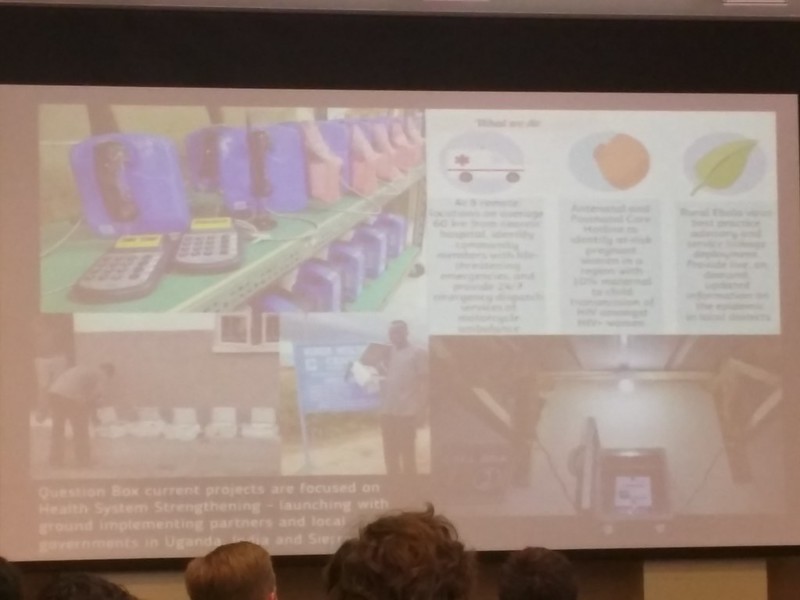
- QuestionBox infrastructure is free public community for central hotline in local language
- Featured in World Economic Forum as data-driven development
- Community based reciprocity
- Putting QuestionBox in health clinics

IMG_20150622_124216

3 Modes of resilience
1) direct linkages 2) self-sufficiency 3) short term infrastructure

Crowdsourcing Community Resilience Solutions in Dhaka 
Ian O’Donnell (Red Cross)

- Safer, healthier and stronger communities
- Designing across Red Cross Red Crescent Network: 189 countries, 60k local branches, 17 million volunteers
- Engaging one billion people for safety and resilience by 2025
- Enabling local problem solving at scale
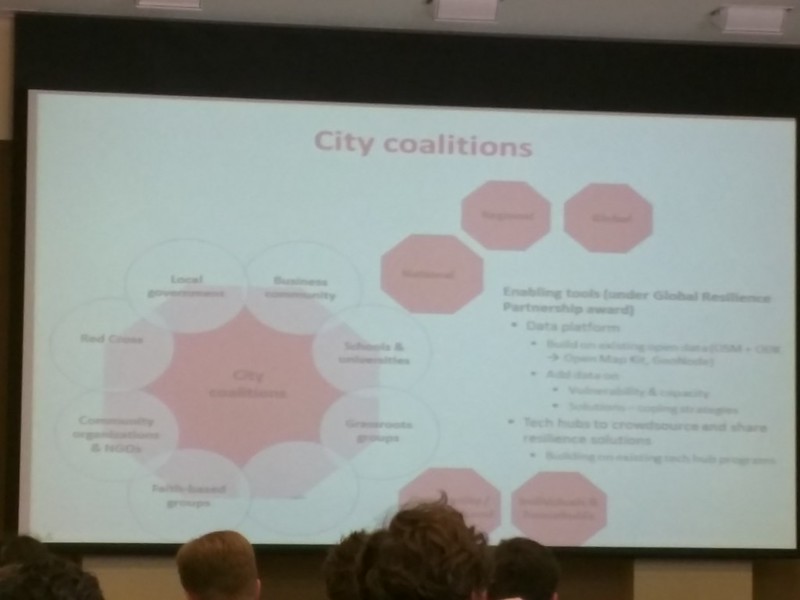
   -RedCross, Governmental networks, academic and NGOs, business networks
- Making city coalitions
- Working with urban slum in Dhaka. Not a lot of information sharing
- Working with Open Streetmap, Tech Hubs, utilization of mobile data, working with World Bank, etc

IMG_20150622_125359

Disclaimer: The opinions expressed here are my own, and do not reflect those of my employer. -Fumi Yamazaki

Collaborative Mapping & Crowdsourcing (Notes from Technologies for Crisis Response & Community Resilience #2)

Integrating Mobile Data Collection with Satellite Imagery 
Nicholai Lidow (Premise)

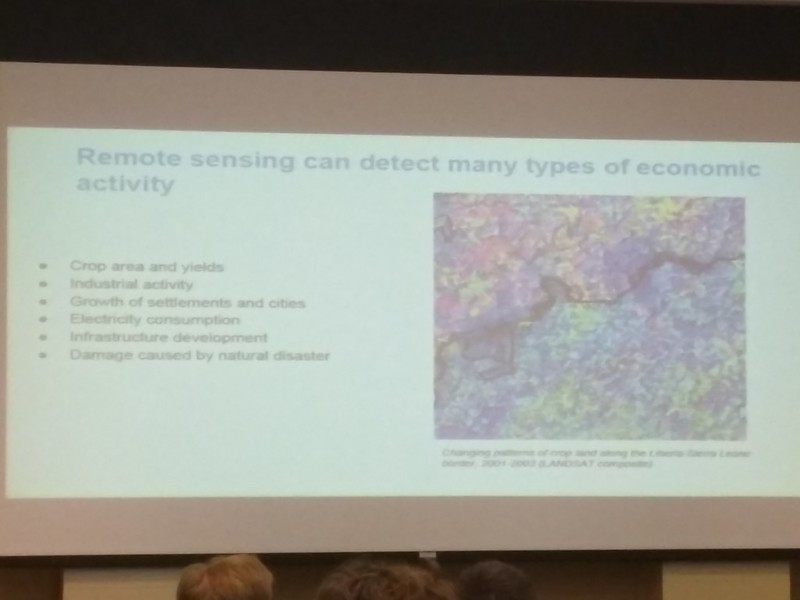
- Remote sensing and mobile data collection
- Detect many types of economic activity
- Less than 25km between Siera Lione and Liberia near the border, but the patterns of crops are changing

  IMG_20150622_114412 

- No matter how good the sensors get, there are things you cannot see fro the satellite (ex. indoors, cloudy, higher frequency, greater resolution) 

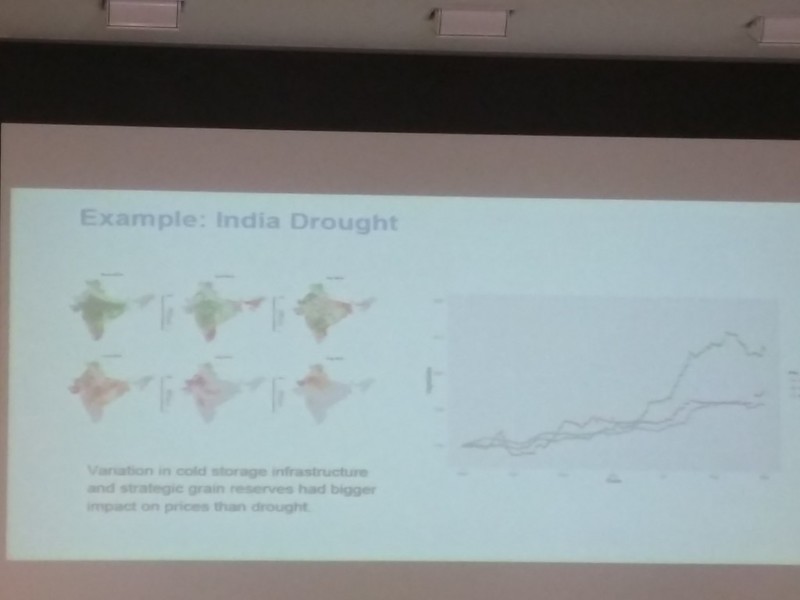
Example: India drought 

- Variation in cold storage infrastructure and strategic grain reserves had bigger impact on prices than drought itself
- Collecting rapid information as needed

IMG_20150622_114627 

Example: Indonesia

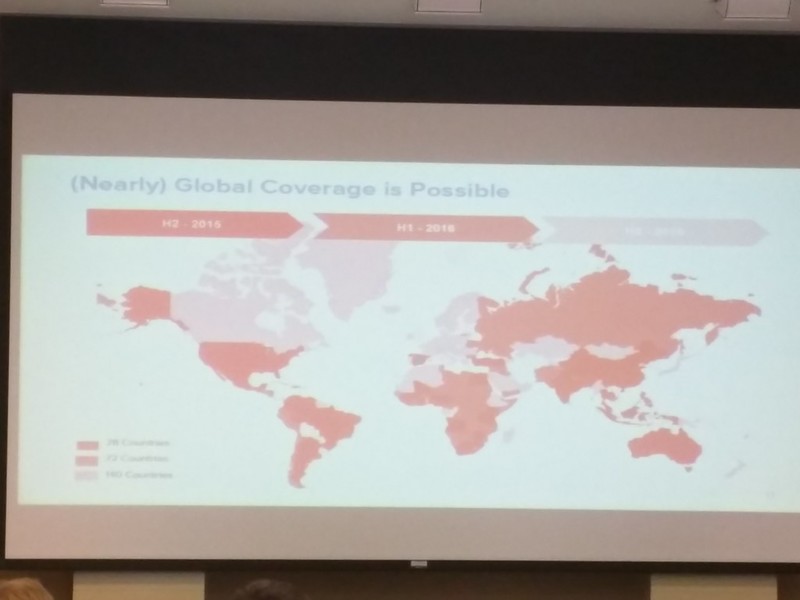
Global coverage of mobile data
- Currently in 30 countries, expanding to 140 countries in 2 years.
- Geotagged photos, getting the data from contributors and partners
- Data update by untrained contributors- will judge over time, teams looking with human insights to potential data quality issues.
- Recruiting contributors via job boards, SNS, partner with local organizations, sending people in if needed.

IMG_20150622_115003

- Creating a feedback loop- global network of mobile data collection and standardized data stream, analytics and providing additional data to improve forecasts and answer questions.

Using Telecom Data for Social Good 
Daan Struyven (Real Impact Analytics)

- Using big data to help policy makers and aid workers foster the social public good and maximize impact

1. Improving the response to disease outbreaks

- Pandemics killed, and can kill millions of people
- Bill Gates pushing research
- Lessons from Ebola
  - monitoring could have been better
  - medical and supply
  - quarantines (quarantine rules were completely ad hoc)
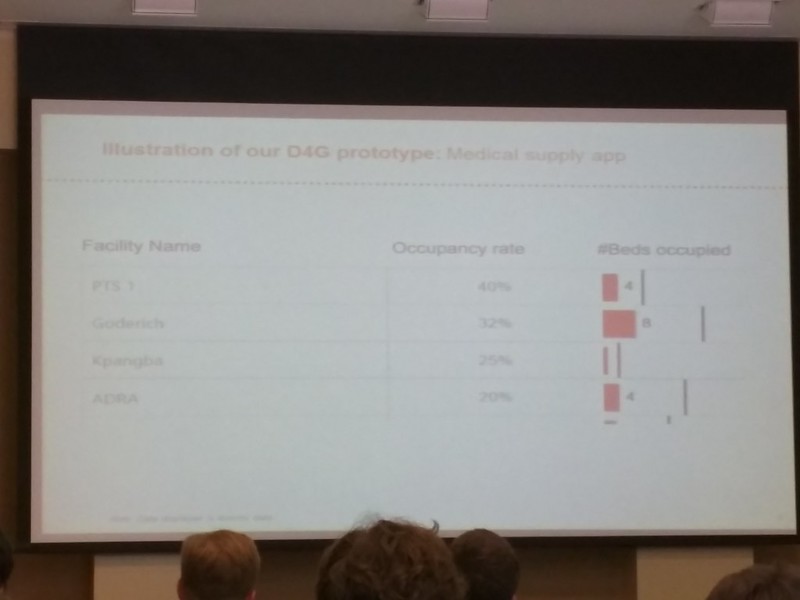
- Developing 3 apps: disease monitoring app, medical supply app and quarantine app

IMG_20150622_120446

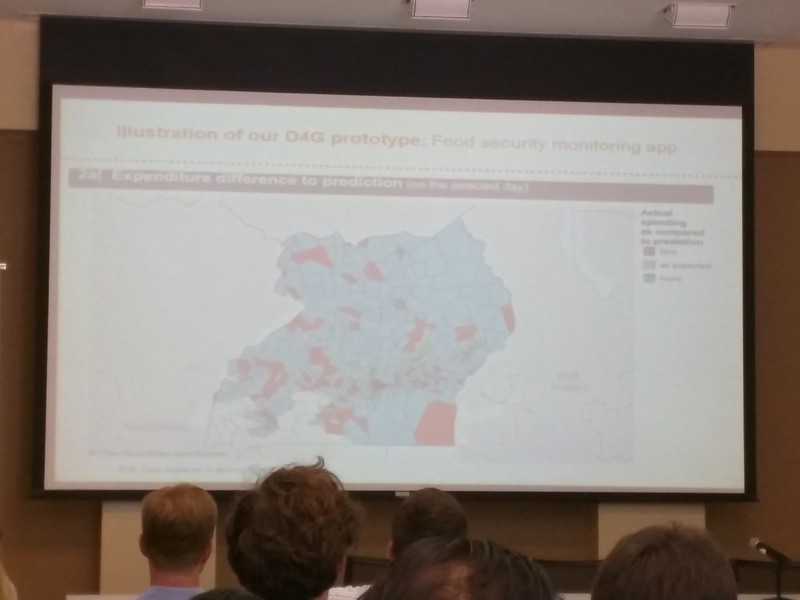
2. Detect and tackle food crises through better monitoring

- 800 million people are under-nourished
- Cause is food demand by low and volatile income / supply (volatile climate, crop quality)
- Income shocks and nutrition ($2/day)
- Food security monitoring

IMG_20150622_120739

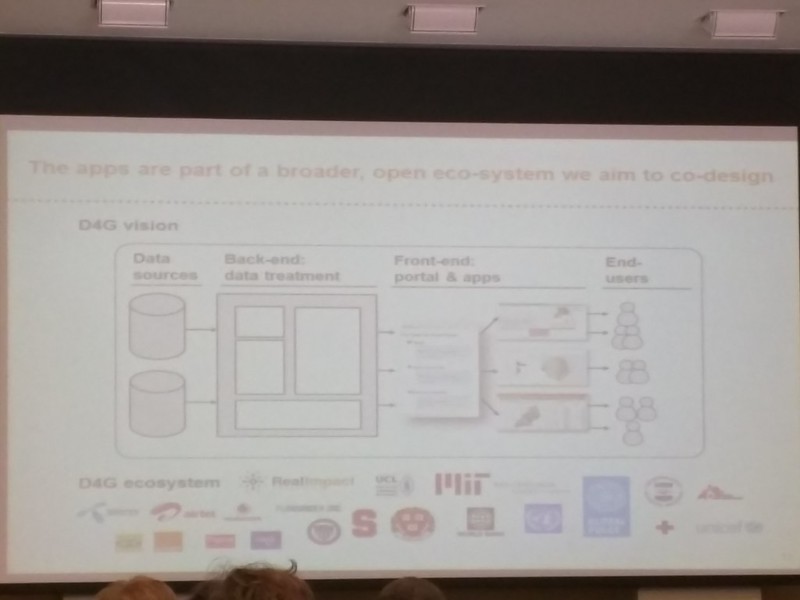
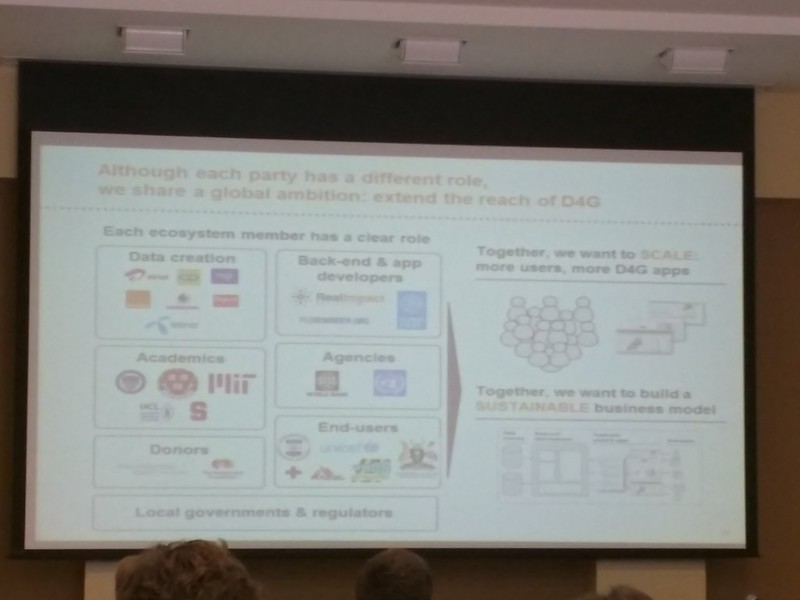
3. Building broader and open ecosystem to co-design

IMG_20150622_120802

IMG_20150622_120914

Q: How do you get data from mobile companies?
A: Compensating for cost, changing culture of data sharing to use it for public goods

Disclaimer: The opinions expressed here are my own, and do not reflect those of my employer. -Fumi Yamazaki

Social & Environmental Monitoring from Space (Notes from Technologies for Crisis Response & Community Resilience #1)

Today I joined Technologies for Crisis Response  & Community Resilience meeting at Berkeley and here are some notes.

Agenda of the conference:

Democratizing Access to Information About our Changing Planet 
Andrew Zolli (Planet Labs)

Our collective resilience challenge:
- How do we help communities and systems persist, recover and thrive amid disruption?
- How do we make communities listen? > sociological issue, not technical issue.
- We should be in age of big indicator, NOT age of big data.

Successful crisis response:
- Context specific
- Bound together in ad hoc manner (like Jazz)
- No single enterprise, tool, or organization can solve everything in disasters and resilience.

Crisis response should be considered in broader time horizon
- Natural or manmade disaster, refugees used to be 8 years in past, increased to 20 years (baby gets adult in shelters...)

Planet Labs > aiming to get visuals everywhere, every day, will enable a new approach to water, nature, city planning.

We can make API today, but everything might change tomorrow. It is more important to do capacity building. We need to work "with not for" the communities.

NGOs- need a new model of funding, collaborating, experimenting and sharing.

Newest things are always the most fragile. Old technology is not sophisticated but robust. Make the new technologies less fragile by working with the existing systems. Not about Silicon Valley way of disruption, we need to be working with existing processes. We need to be agile enough to work in different ways and adjust to local communities.

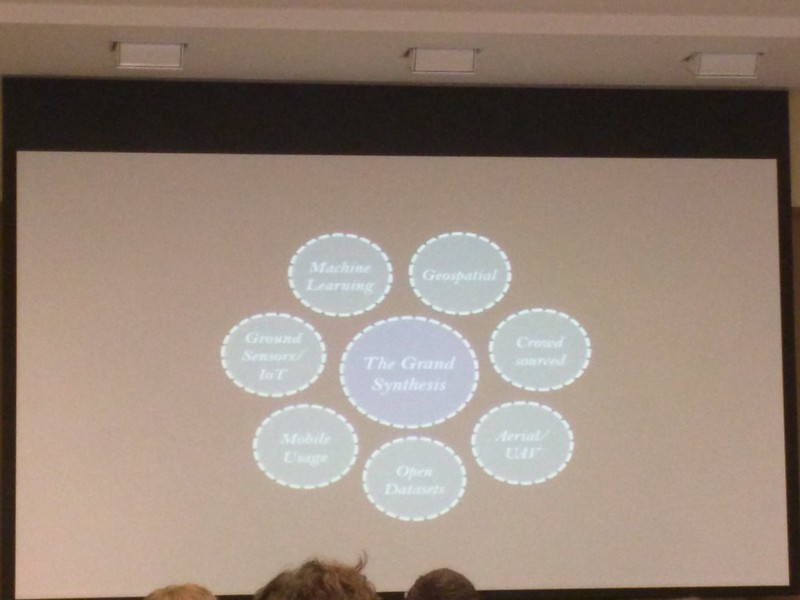
IMG_20150622_094705

Assessing Impacts in Agriculture at Ultra-low Costs
LSMS (Living Standards Measurement Study)
David Lobell (Stanford University) & Talip Kilic (World Bank)

-3 elements for ultra-low cost accurate crop monitoring
1) Satellite data 2) Computation (Google Earth Engine) 3) Robust algorithms

Joined Skybox for Good program

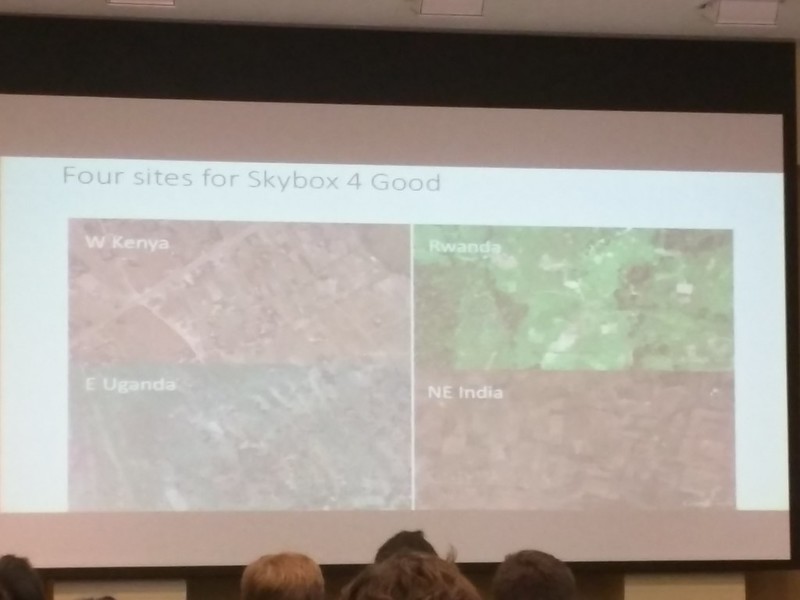
Testing in 4 areas: West Kenya, East Uganda, Rwanda and NE India.

IMG_20150622_100619

Example in Kenya
- Got imagery and walked the fields
- Vegetation, measured the facts and on the ground information and data

Example in India
- Crop cuts

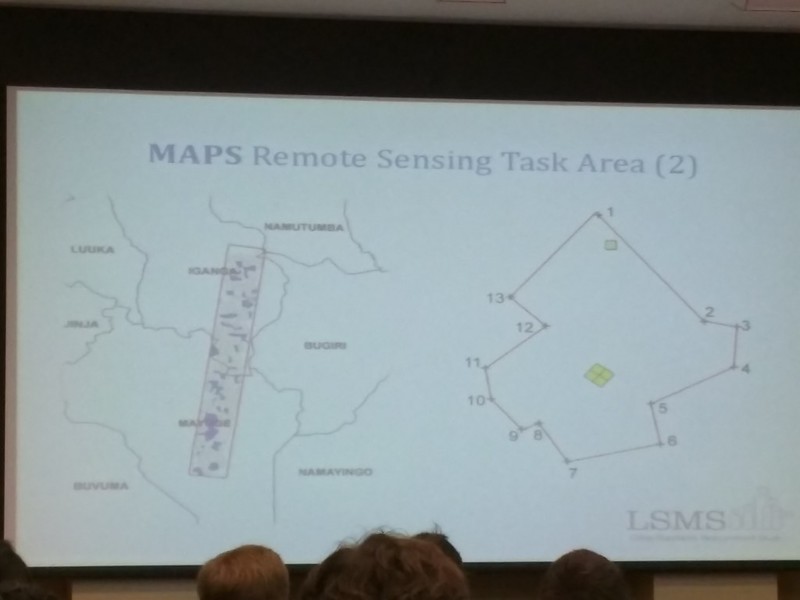
Example in Uganda
- Development Research Group at World Bank

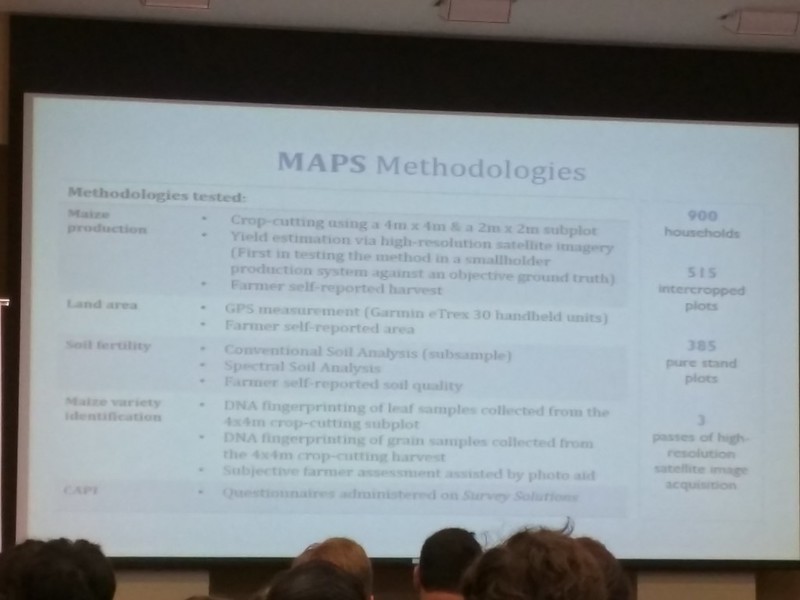
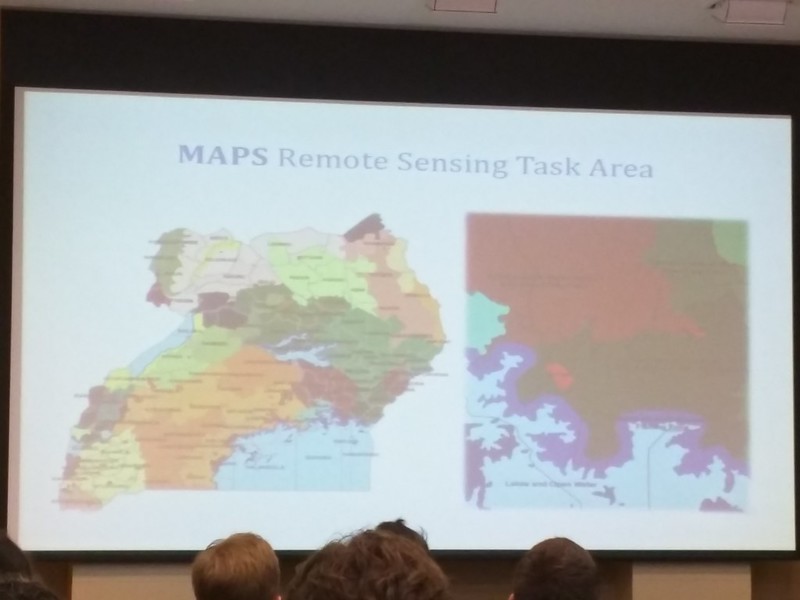
Maize Productivity, variety and soil fertility (MAPS)
- Supported by LSMS methodological validation program
- Test subjective approaches to measurement vis a vis objective methods for maize production, variety and soil fertility
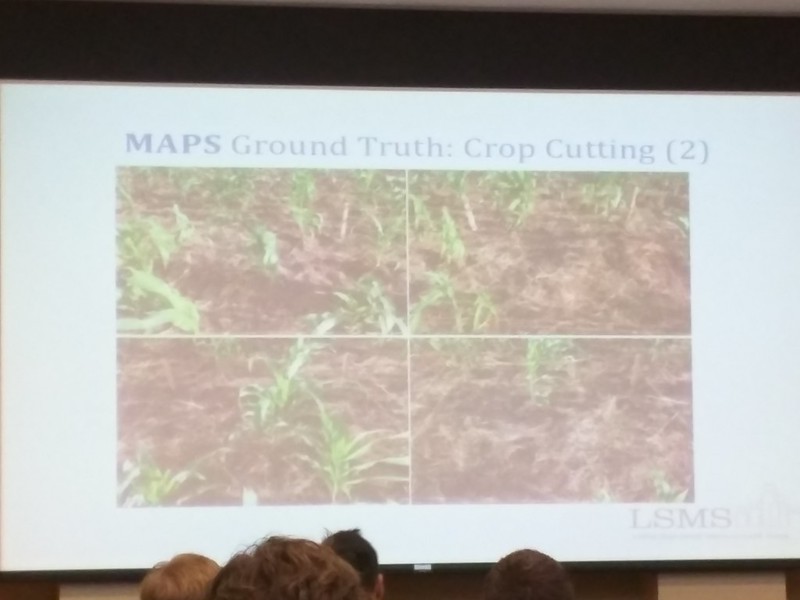
- Crop cutting is gold standard
- Physical measurement

IMG_20150622_100824

MAPS methodologies

IMG_20150622_101351

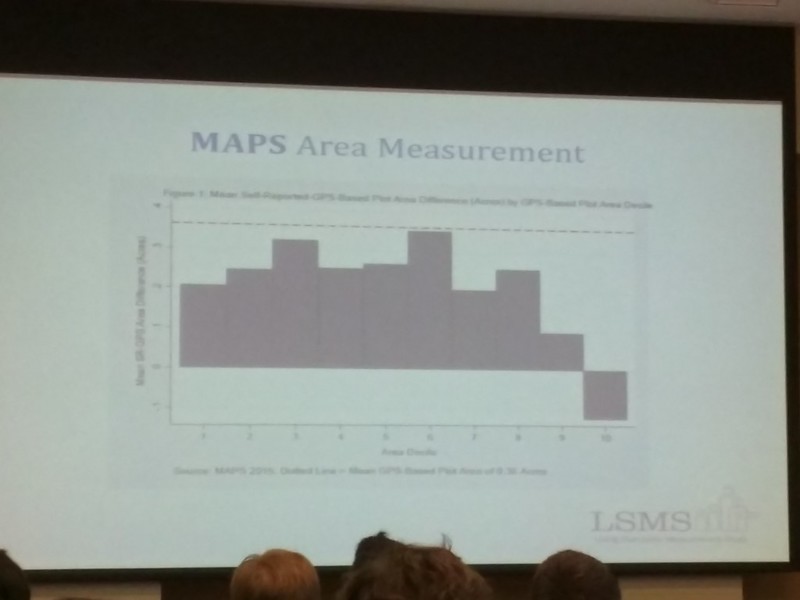
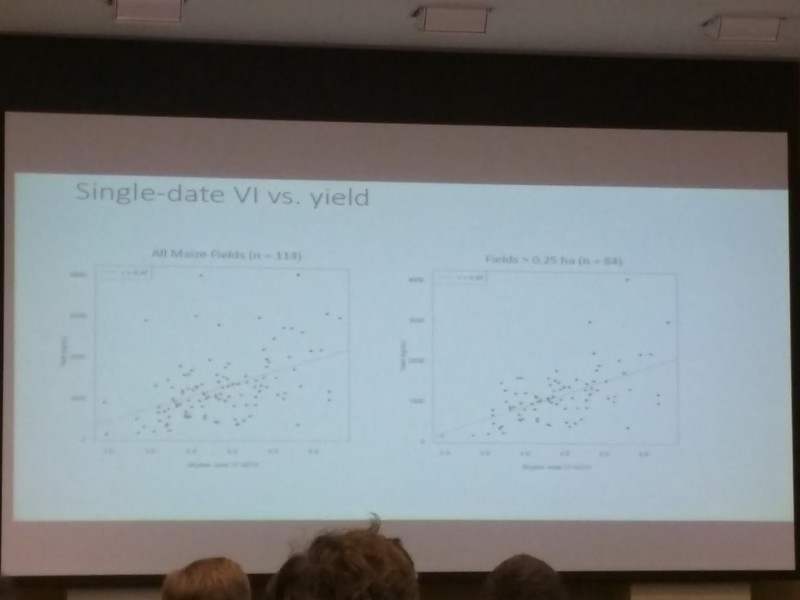
- GPS data vs data that farmers are reporting (farmers are over estimating)

IMG_20150622_101638

IMG_20150622_101745

IMG_20150622_101759

Difficulty in data: Even in this quadrant, crop density is very different

IMG_20150622_101930

- In the past: lack of attention to data quality
- High frequency surveys of households and communities at strategically selected locations

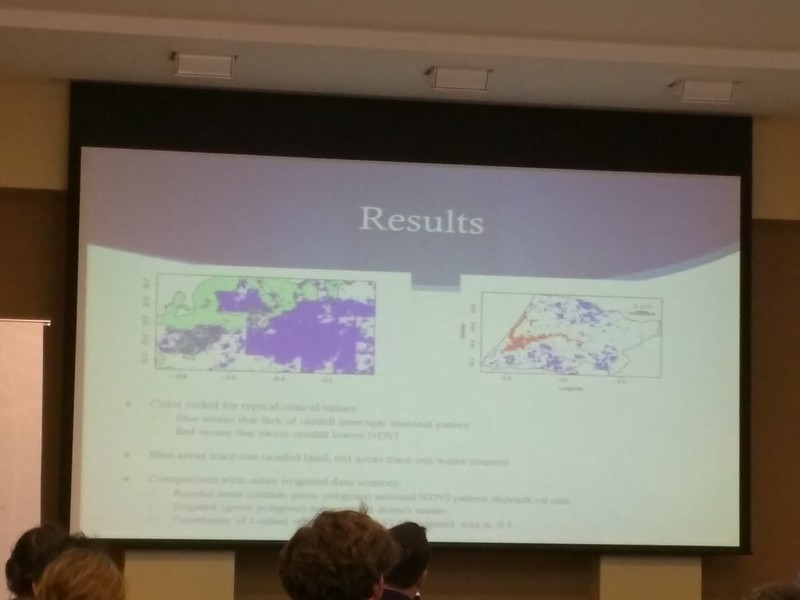
Differentiating Irrigated and Rainfed Agriculture for Efficient Water Usage in Morocco 
Travis Lybbert & Michael Norton (UC Davis)

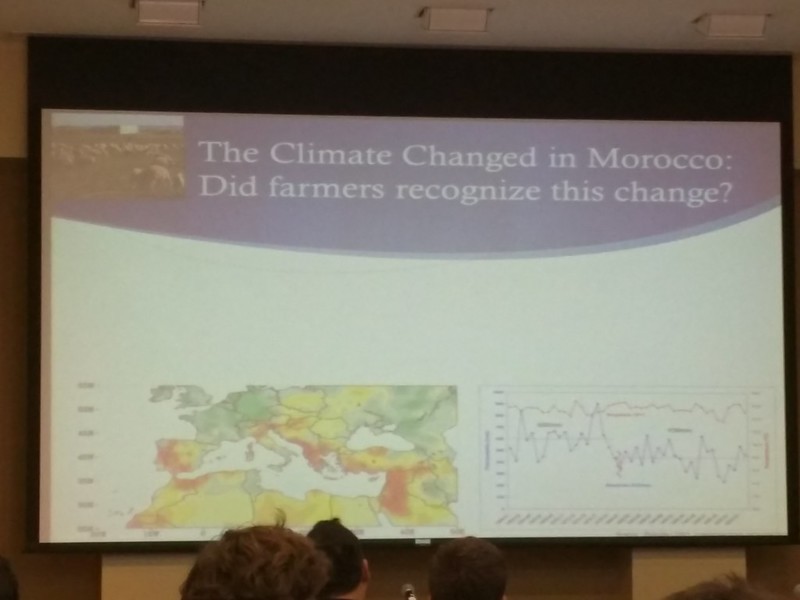
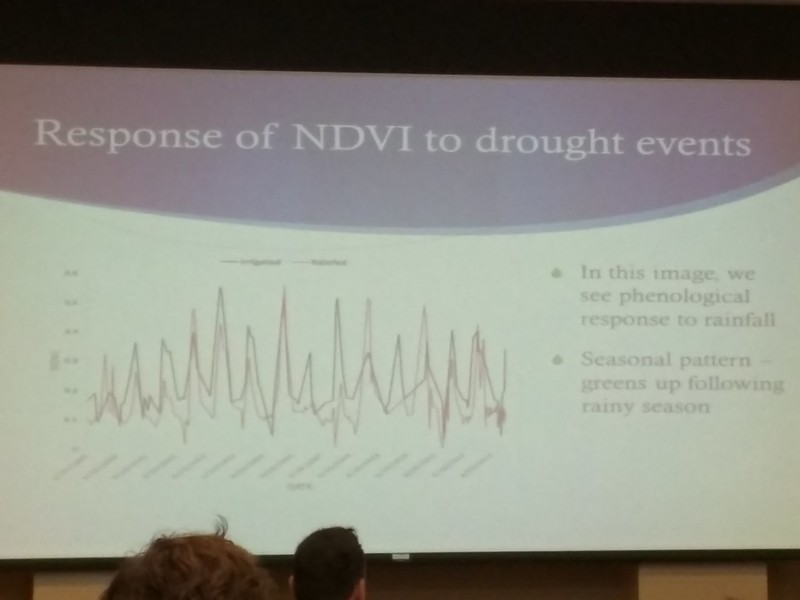
Climate change: notice change and then adapt... resilience requires recognition that "something changed". How well and quickly can farmers detect those changes? A lot of noise, complicated learning, tough learning process.

Looking at Kilimanjaro everyday- the farmers has the history. But there's good years and bad years, how can farmers detect the bigger changes? Farmer-level decision making. Can we track the spatial and temporal diffusion of irrigated agriculture in recent decades using satellite images?

IMG_20150622_103532

Existing data and methods:
-Moroccan Agricultural Atlas and FAO AQUASTAT raster files, etc
-Methods: land cover change detection (comparison of 2-3 scenes to using them all)
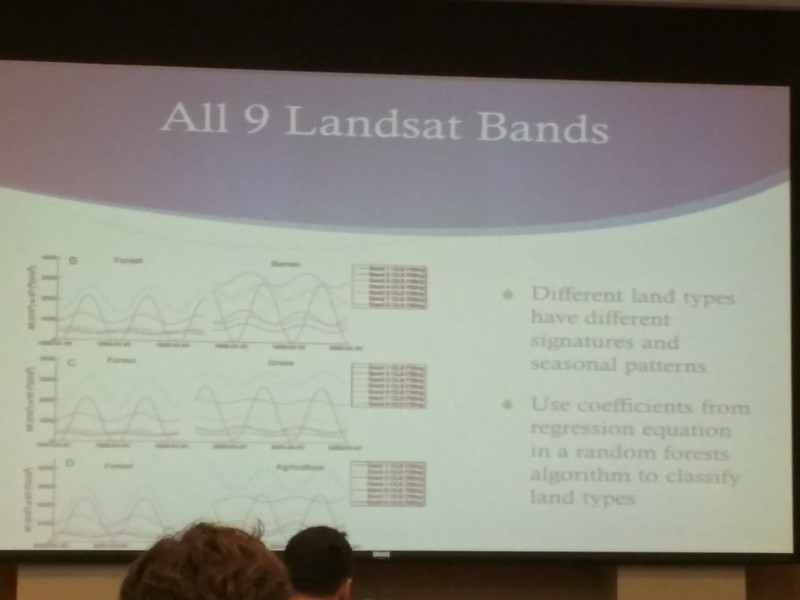
-Continuous Change Detection and Classification (CCDC) Algorithm

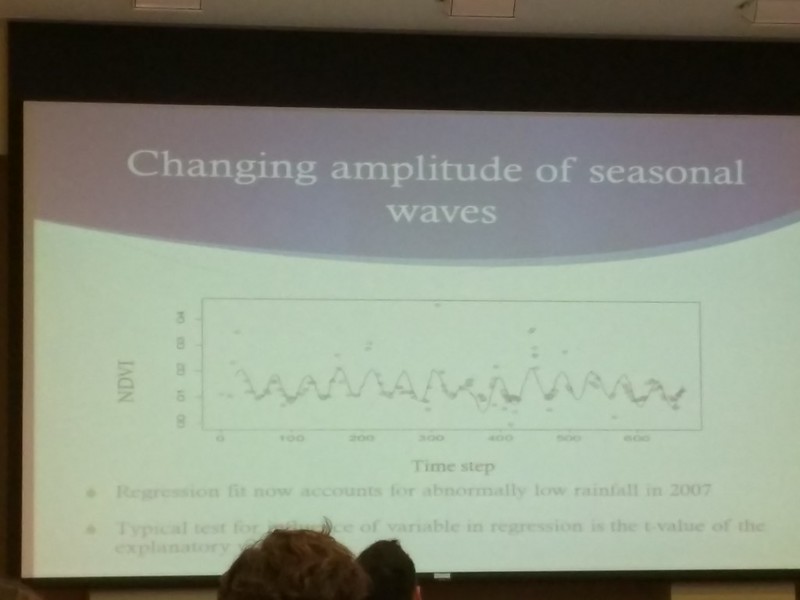
Seasonal patterns

IMG_20150622_104149

IMG_20150622_104208

IMG_20150622_104336

IMG_20150622_104410

High-resolution Earth Imagery for Sustainable Development 
Taner Kodanaz (DigitalGlobe)

- Better understand and better seeing, solving the problems, not just consuming imagery but working to bring them into existing systems.
- Small and agile organizations do better at utilizing those data, but when come into national, UN, World Bank level, things are more difficult and we need to find out how to collaborate.

Global challenges
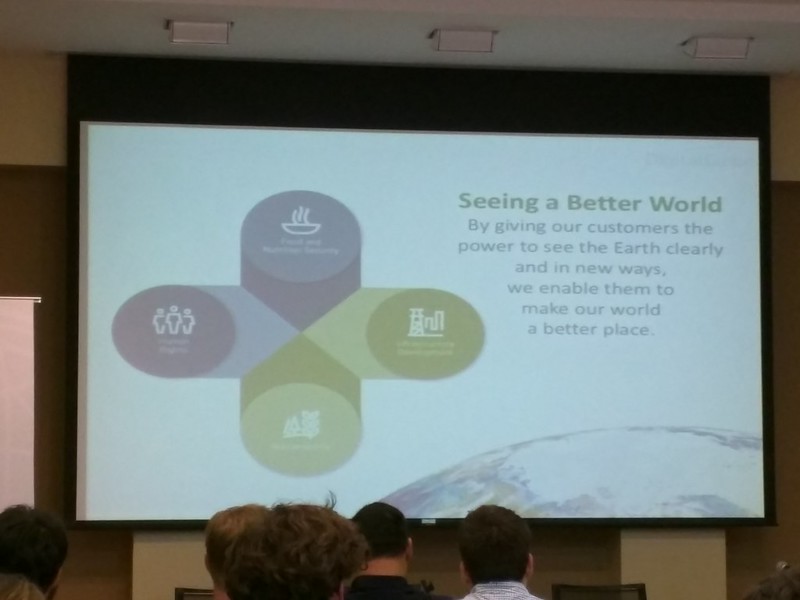
Agriculture, environment, human rights, infrastructure development

IMG_20150622_105650

Digital Globe is focused on how to help organizations make better decisions by giving the customers the power to see the earth clearly and in new ways, enable them to make a better place whether it is through increasing efficiency or saving lives, etc.

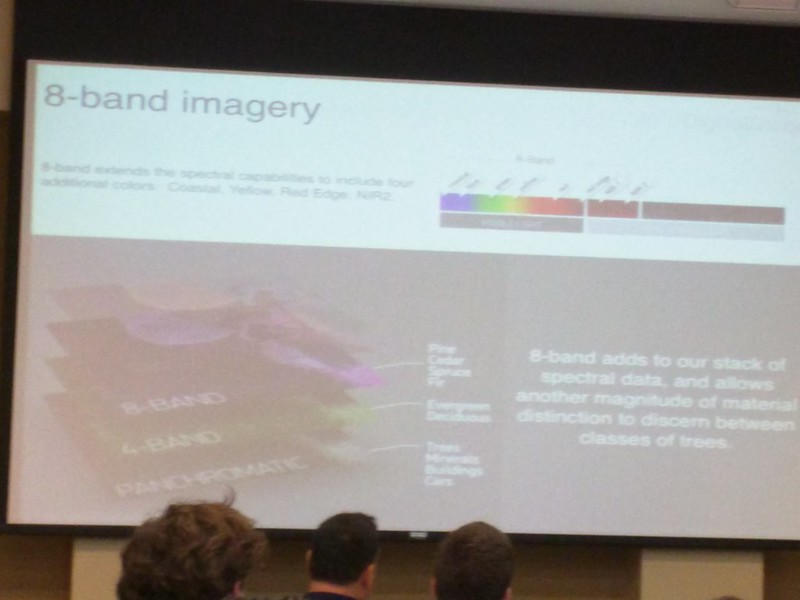
What satellites can see and can't see:

Panchromatic imagery (black and white) -trees, minerals, etc
4-band imagery - differentiate evergreen and deciduous tree
8-band imagery - pine, cedar etc

IMG_20150622_110049

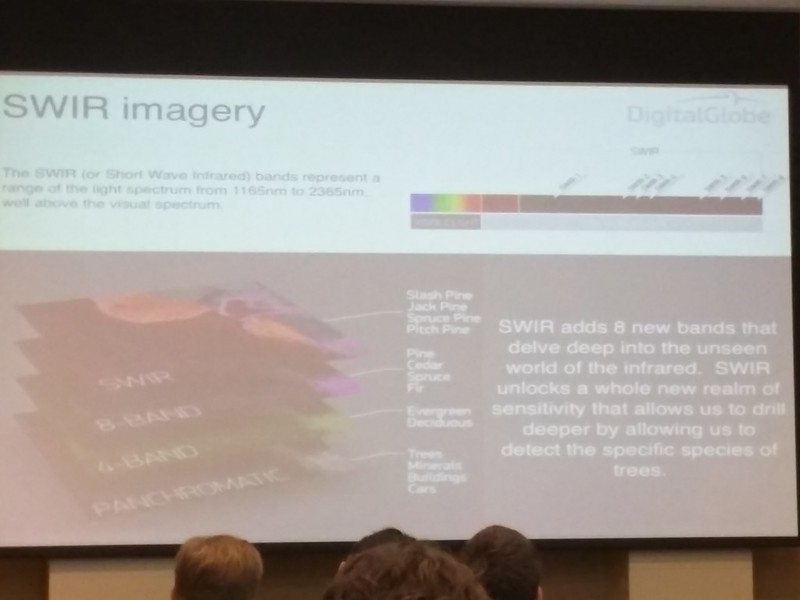
SWIR imagery (short wave infrared)

IMG_20150622_110127

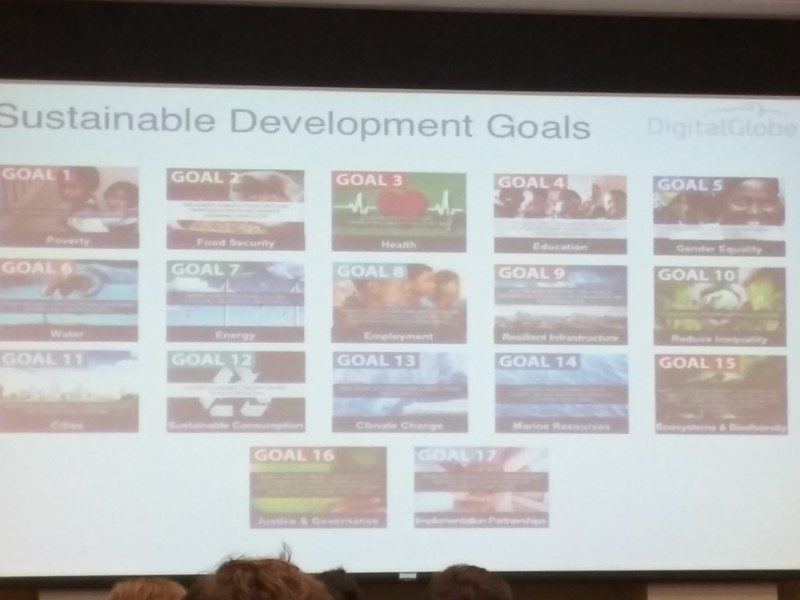
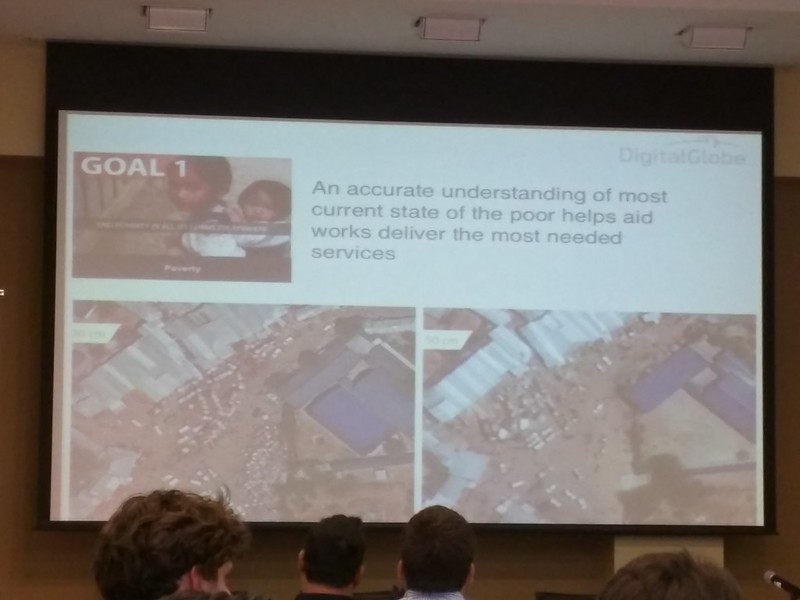
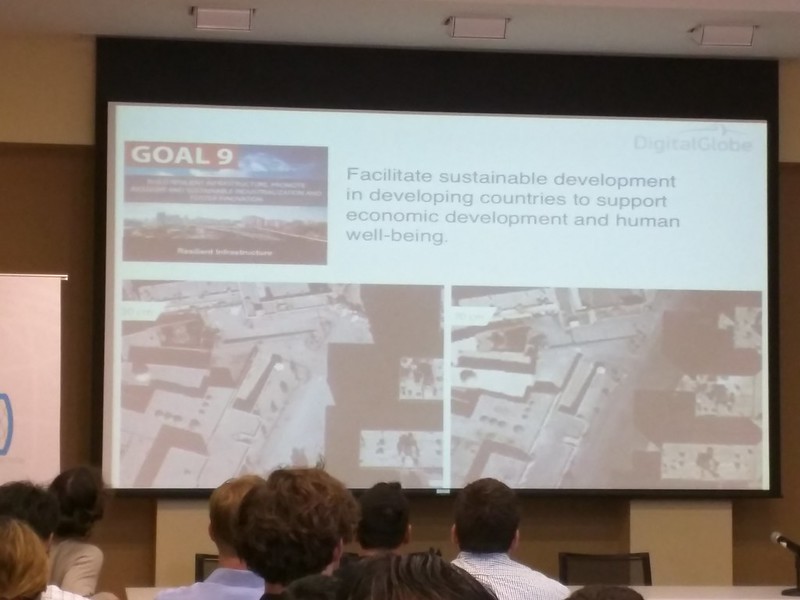
UN's 17 sustainable development goals:

IMG_20150622_110232

Through those imagery, we can see individuals, where people are living and moving, and the infrastructure to meet those goals.

IMG_20150622_110329

IMG_20150622_110414

"The surface of Earth itself is an immense loom upon which the sun weaves the fabric of existence"

Q: How do we include the communities and right insights that they have? They are the ones who has insights and implementation for resilience, not the ones who are working on data and algorithms

A: Working together with communities

Disclaimer: The opinions expressed here are my own, and do not reflect those of my employer. -Fumi Yamazaki

2014年4月8日火曜日

Code for Japan - Fellowship in Namie, Fukushima

Code for Japan is starting its first fellowship program in Namie, Fukushima.


Background information about the city:

Namie is a town in Futaba District, Fukushima Prefecture, Japan. The town was heavily damaged in the 2011 Tohoku earthquake, tsunami and the nuclear power plant accident, and the whole town (21,000 people) evacuated due to the radiation threat from the nuclear power plant, and they still cannot go back to their hometown after 3 years have passed.


Back in October 2012, my colleagues from Google and I visited the local government of Namie to discuss what we can do to help using technology.

The town was in diaspora, and in order to discuss with citizens evacuated in various places in Japan, they needed technology to discuss. "How about using Hangout? You can use it for free, and can log in from 10 different places." Local government is split and functioning in 3 different places, so they used Hangout to carry on their discussions and meetings.


Many people were not allowed to enter their hometown, and were asking to see the current state of their town. Therefore, through collaboration between the town and Google, we were able to drive Street View cars through Namie-machi to capture panoramic images of the abandoned city.

You can read the blog post here:
Imagery on Google Maps of Fukushima Exclusion Zone Town Namie-machi


When there is such disaster, I sometimes think technology is so useless. But at the same time, we find technology is so powerful and helpful and we can challenge things that were impossible otherwise.

Back in April 2011, less than one month after the disaster, their mayor Tamotsu Baba used YouTube to provide message to their citizens. TV stations will not broadcast all of the small town's mayors' messages. They will probably not show the full video of 5 minutes of all of the small towns. Mass media has the right to control the contents on TVs. But on the Internet, you have the right to control the contents.

If their citizens failed to see the news, there is no way to search on TV programs and watch it later. TV stations will not archive videos for you. But videos on the Internet can be viewed later if the citizens found out later that their mayor was trying to reach out to them.


"But what about the old people who can't use the Internet? What about the digital divide?" You may ask. That is exactly why the town of Namie is going to distribute tablets to every single household in collaboration with Code for Japan and its subsidiary Code for Namie.

"Can old people use tablets? I have heard many companies sent tablets to evacuation centers in Tohoku and they were never used." That is exactly why they are trying to get the fellows in Namie, and build apps from the user standpoint. In fact, when I visited the temporary housing of the evacuees in Otsuchi, I talked with an old man. He had a feature phone, and he said he only uses it to talk (voice), e-mail and look at the website of his town. He uses voice and e-mail because it is easy, never watches websites because it is small and hard for him, but looks at his hometown's website because otherwise he will miss the information. When he was in the evacuation shelter, he watched YouTube with other kids and evacuees and because the screens of tablets are bigger he enjoyed watching them.

What will happen at Code for Namie?

1. Town of Namie is planning to distribute tablets to their citizens. Code for Namie will support building apps and run various workshops to help the citizens.
2. Send 3 engineers to work for Namie. The team will support the distribution of the tablets, build communication platforms to connect the citizens who have evacuated all over Japan.
3. Build the local community "Code for Namie".

Saying "We're starting Code for All fellowship in Japan" is not as simple as it sounds, because what we are tackling is not a city that has their own citizens in their town- they are all evacuees. The town that we are trying to work with is a victim of 3 disasters that each left tragedy to the town- earthquake broke buildings, tsunami washed away part of the town, and due to nuclear power plant accident the whole town is polluted with radiation. They have budget of 290 million yen (approximately 2.9 million USD as of 4/7 2014), including the cost of tablet that will be distributed to all of the 10,000 households.

"Why now?" Initially, the town was planning to aim to return all of their citizens back to Namie, but according to a survey the number of people wanting to come back to the hometown is decreasing. If we don't build the community and rebuild the connection between the citizens now, the town is in jeopardy of being lost.

Press release by Code for Japan
For the First Time Ever – “Code for Japan”To Start a Private Engineer Dispatch Program to Local Governments 
-Supporting the tablet device distribution project in Namie-town, Fukushima Prefecture, to rebuild the bonds of residents-


Disclaimer: The opinions expressed here are my own, and do not reflect those of my employer. -Fumi Yamazaki

2014年3月28日金曜日

Lessons from Crisis Response in Japan: Matching supplies

Matching supplies is hard in a chaotic situation during and after natural disaster.

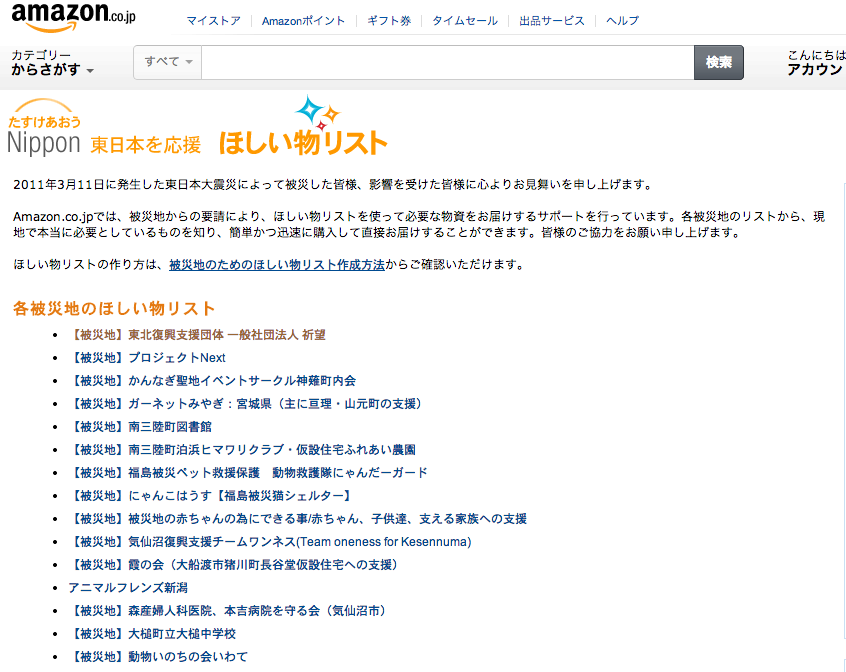
Power of the Internet was realized during crisis response in Japan, but there were many lessons learned there too. Many people tweeted what they needed, and supplies were sent to them, but controlling the supply and demand was difficult so some towns received 10 years worth of diapers that they could not store. Many people started to use Amazon Wishlist which worked well.

There were locals who were setting up websites to clarify what they want people to send - such as food, diapers, etc. There was a wiki that gathered best practices to send supplies to areas hit by disaster, as well as list of the places that are accepting supply donations.

What many people don't realize is that sending supplies should be carefully done, and receiving supplies and distributing them require expertise, otherwise it will be a nightmare. We have seen several examples of those incidents.

So let's observe the problems that happened:

Too much supplies that cities are unable to cope with and piled up.

I went to one of the city halls of a bigger city, and they said they were receiving many supplies that is piling up in the storage, they are working on trying to distribute those supplies to evacuation centers restlessly, but are not able to keep up with the massive supplies.

Volunteer centers that effectively distributed supplies.

In July 2011, I went to host a hackathon in a volunteer center in Toono called Toono Magokoro Net which was gathering many volunteers nationwide and sending them off to disaster-hit areas every day. While I was having a meeting with the director there- Mr. Kazuhiko Tada, one of the city officials from the disaster came and asked if they are able to distribute 4,000 sausages. "The sausages are going to go bad soon, but we can't distribute so many. If we ship them here, will you be able to distribute them?" Toono Magokoro Net sends off shuttles volunteers to evacuation centers everyday, and there are much more than 4,000 evacuees in those centers. "Of course. Please send it to us." replied Tada-san.

HackForJapan遠野

HackForJapan遠野

Using Twitter effectively

In Japan, Twitter was amass with information about how to help people in Tohoku. Some people tweeted what they needed, and asking to send them. The problem is, when they tweet, they get too much supplies since information is uncontrollable. "Please stop sending diapers- we have received 10 years worth of diapers already"- power of Twitter was actually too strong.

Tada-san was not tech-savvy, but he was clever. He was observing the situation. "Getting local governments control supply and demand will not work, because right after the disaster, speed is important. Governments' process is slow. If you need something during disaster, you need it immediately, and getting them quickly is more important than controlling them." says Tada-san.

What he learned was that Information flow on internet is extremely speedy. Therefore, he does not tweet until the very last minute until supply is gone. If you worry that you might not have enough and tweet too early or ask for too many, you will not have places to store everything. If you tweet just before supplies are all gone, there will be massive supply arriving that is beyond what they can use. Then, he will provide those excessive supplies to neighboring towns and cities so that he can control afterwards.

Too much bureaucracy and "fairness"

One of the problems that we saw after 2011 earthquake was trying to push too much bureaucracy and fairness. "We have 100 evacuees, so we can't accept 80 rice balls because it will cause unfairness." Seriously? Just give 80 rice balls to 80 of them and give the other 20 sandwiches. But this was reality. Under the word "fairness" lots of supplies were not accepted.

Efficiency over Fairness, and trust the people

In April 2011, I visited Aizu in Fukushima, and met Mr. Tadashi Egawa who works for the city of Aizu. This is the supply center that he created which really amazed me.

会津

Right after the earthquake, he knew there will be massive evacuation, and he knew there would be massive supplies that he would have to distribute. First thing he did was to go and get the red cones. He used the empty gymnasium to build supply center, and divided areas with the huge cones so that people will be able to know where the cleaning materials are, kitchenware are, clothes are for women, men, girls and boys etc in clusters.

Evacuees can visit this supply center and take only what they actually need. Some people take a bit more, some people takes a bit less, they did not limit the number of things they can take, but they did have people at the door to ensure visitors are behaving in a good manner. Nobody was acting evil and were taking only what they needed.

This is the "big red cone".

会津

"Children's area" with lots of diapers.

会津

Using Amazon Wishlist

In order to avoid un-necessary supplies coming in and eating the storage, and necessary things not coming in, many people started to use Amazon Wishlist to match what they want in the disaster-hit area and what other people can send to them.

This is the list of disaster relief for Tohoku Amazon Wishlist.
http://www.amazon.co.jp/gp/feature.html?docId=3077074166


And this is how it looks like. The evacuation center in Ogachi district and evacuees in the neighboring area are requesting 70 toilet paper rolls (of which 33 received), and 256 bags of rice (of which 218 received).


Similar project happened when Hurricane Sandy hit New York.

Occupy Sandy Hacks Amazon's Wedding Registry (in a Good Way)

This is their Amazon Wedding Registry page:
http://www.amazon.com/registry/wedding/32TAA123PJR42

You can see they are gathering supplies in masses, and they are going to be distributing them. Asked for 850 hand warmers (of which 717 received), asked for 200 safety goggles (of which 157 received), asked for 850 cleaning cloths (of which 841 received).


Medical supplies matching commander volunteering remotely from Australia

Lastly, I'd like to give an answer to the question whether you have to be in the same country or on the grounds to help. The answer is a no.

In the article "Internet Enabled Remote Volunteer Activities(ja)" that my friends +Nobuyuki Hayashi and +Tatsuya Yamaji put together, they introduce one great example of Wilson Naomi. Wilson-san who was a nurse in Australia when the earthquake happened. She started to gather information as well as donation, and realized that nutritional supplements were lacking. Specifically, "Ensure" which is necessary to send nutrition by tube to patients who cannot eat by themselves, is necessary and lack of it would risk peoples' lives. To be honest, Wilson-san was not tech savvy- didn't use anything like blogs, Twitter nor Facebook before the earthquake, and in the past 3 years exchanged only 200 e-mails total. But she started what she can do- she started sending emails to ask for help, and raised 1 million yen in 2 weeks to purchase Ensure and sent them to Tohoku.

She was then asked to help a supply-matching site on delivering equipments to hospitals in Tohoku such as medical equipments, medicine, medical beds and desks and chairs etc.

When dealing with supplies in disaster struck areas, it is not true that the more supplies you get is better. What is important is matching the supplies to those who need them. In this case, medical knowledge and experience was necessary in understanding the local needs and delivering exactly what they need, and Wilson-san started to take the role as commander.

She did not use special tools for this- basically it was emails, mailing lists, blogs and Twitter. She asked via email of the needs, and used Google Maps to specify where the place in need was, where the supplier was, where the volunteer staffs were, and coordinated the delivery. She exchanged more than 10,000 emails during March to December 2011 while she was in control of the medical supply deliveries.

Lessons learned:
It is not the technology or tools that helps, it is the people that helps. Coordinator with the right knowledge is key. If we have the right technology and tools, those people will be able to connect and help beyond physical constraints such as time and location. Wilson-san's work as volunteer staff from Australia using her spare time as "commander of medical equipments deliver in Tohoku" was a great evidence of that.

Disclaimer: The opinions expressed here are my own, and do not reflect those of my employer. -Fumi Yamazaki